NFL Betting in the UK: Market Size, Rules and Where Props Fit
 Available in US
Table of Contents
- Why the size of the UK market matters before you place a single NFL bet
- How big the UK betting market really is
- The shift from the high street to the app in your pocket
- Who actually bets in Britain
- Where the NFL slots into all of this
- The rules of the road for British bettors
- Props as one product among many
- Reading the market before you read the line
Why the size of the UK market matters before you place a single NFL bet
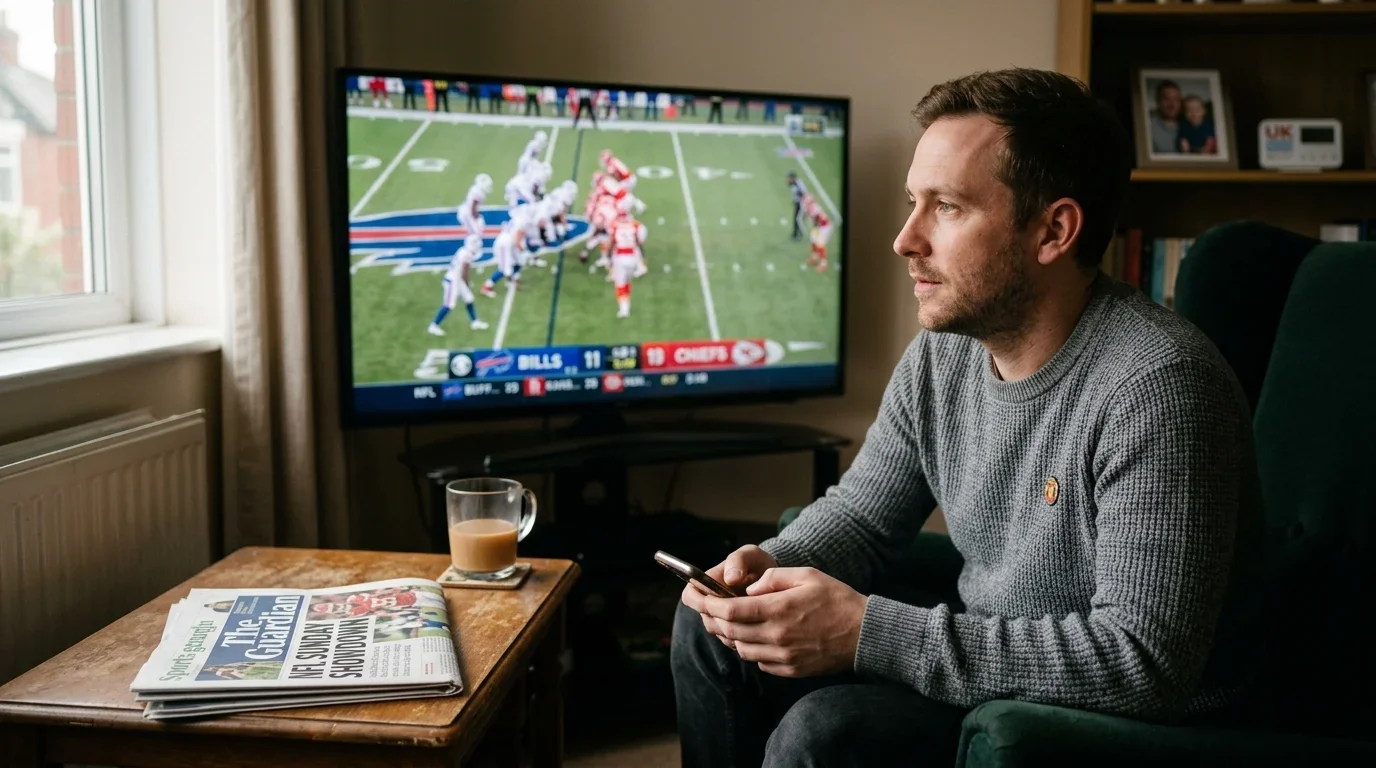
The first time a mate asked me whether NFL betting was “even a thing over here”, I realised most British punters have no idea how large the ground beneath their feet actually is. They picture a few diehards huddled around a laptop at two in the morning, betting on a sport the bookies barely acknowledge. The reality is the opposite, and the numbers tell that story far better than I can.
This is not a how-to guide for backing player props. The pillar handles the value methodology, and a separate piece breaks down the vig maths leg by leg. What I want to do here is draw the map: how big the regulated UK betting industry really is, whether wagering on American football is legal and normal, who actually places these bets, and where NFL player props sit inside an enormous, mature, licensed machine. I have spent nine years analysing this market with a UK lens, and the thing nobody in the search results bothers to give you is the scale.
Scale changes how you think. When you know that the regulated industry posted a gross gambling yield of £16.8 billion in the financial year ending 31 March 2025 — a 7.3% rise year on year and the first time the figure cleared £16 billion — you stop treating NFL betting as a fringe hobby and start treating it as one product line inside a vast, heavily supervised economy. That single figure reframes everything that follows. It tells you the books have the resources, the data and the regulatory obligations of a serious financial sector, and it tells you that the player prop you are eyeing on a Sunday evening has been priced inside that machine, not knocked up on the back of a fag packet. Understanding the room you are standing in is the first edge anyone can hold, and it costs nothing.
Compare the top UK bookmakers for NFL props and their coverage.
How big the UK betting market really is
I once watched a colleague in the United States genuinely struggle to believe that a country the size of the UK could sustain a gambling industry worth what it is. He assumed Britain was a rounding error. He was wrong by a wide margin, and the misconception cuts both ways — plenty of British punters underrate their own market too.
Start with the headline. Gross gambling yield, which is simply the amount operators keep after paying out winnings, reached £16.8 billion across the regulated industry for the year ending 31 March 2025. That is the total the bookmakers, casinos and bingo halls retained, and it grew 7.3% on the previous year while crossing £16 billion for the first time. GGY is the cleanest measure of market size because it strips out the churn of money that gets recycled through winning bets and looks only at what the industry actually earned. When you see £16.8 billion, you are looking at the genuine economic weight of British gambling, not an inflated turnover figure.
The structure underneath that headline is where it gets interesting for anyone betting on NFL. The remote sector — online casino, betting and bingo combined — generated £7.8 billion of that yield, a 13.1% jump year on year, and it now accounts for 46% of the entire Great Britain market. Online is no longer the upstart challenger to the high street; it is very nearly half the business and growing far faster than the rest. If you bet on the NFL, you bet online, almost without exception. American football is barely a retail product in this country, so the online surge is your home turf.
Drill one level deeper and the picture sharpens again. Within the online world, remote betting specifically — the sportsbook side rather than online slots or table games — produced £2.6 billion of gross gambling yield in the same year, up 10.9%. And inside that betting figure, football leads everything with £1.3 billion, while horse racing follows on £766.7 million. That hierarchy matters because it shows you how the books prioritise their attention and their margins. Domestic football association football, to be precise gets the lion’s share of liquidity and the sharpest pricing because that is where British money concentrates. American football sits well down the queue, which has direct consequences for the prices you see, but more on that later.
What I take from these figures, and what I want you to take, is that you are operating inside a deep, liquid, professionally run market. The bookmakers are not amateurs and the volumes are not trivial. That depth is mostly aimed at football, racing and the big domestic sports, but the same operators, the same compliance teams and the same risk models extend across to the NFL markets you care about. You are a small fish in a very large, very well-managed pond, and knowing the dimensions of that pond is the difference between betting blind and betting with context.
The shift from the high street to the app in your pocket
I still remember the betting shop on my local parade — the smell of it, the racing pages pinned to the wall, the bloke behind the counter who knew everyone’s accumulator by heart. That shop closed two years ago. Its story is the story of the whole UK market, and the data captures the migration with brutal clarity.
The number of betting shops in Great Britain fell to 5,825, a 1.8% drop year on year and the eleventh consecutive year of decline. Stretch the lens over a decade and the contraction runs to roughly 36%. More than a third of the high street betting estate has simply vanished inside ten years. That is not a blip or a pandemic hangover; it is a structural, decade-long shift, and it points in one direction only — the phone in your hand.
The flip side confirms it. In the first calendar quarter of 2025, online gross gambling yield rose 7% year on year to £1.45 billion, generated across 25.2 billion bets and spins with 13.5 million active accounts a month. Meanwhile retail betting yield in that same quarter fell 3% to £554 million, with the number of bets and spins down 5%. Money is not disappearing from the industry; it is relocating from the counter to the cloud. For NFL bettors this is barely even a question — try walking into a high street shop and asking for an anytime touchdown scorer market on a Thursday night game in Kansas City and watch the response — but it is worth understanding that you are riding the dominant current, not swimming against it.
There is a quieter signal buried in the registration data that I find genuinely encouraging. New account registrations in the online casino, betting and bingo segment actually fell 4.1% to 34.0 million for the year, with 24.4 million active accounts at quarter end. A market that is growing in yield while new sign-ups soften is a market maturing rather than merely inflating — existing bettors doing more, rather than a constant flood of fresh, inexperienced money. That maturity is part of why the pricing is as tight as it is, and why finding genuine value takes method rather than luck.
Who actually bets in Britain
People love to imagine the typical British gambler, and the picture they paint is usually a caricature. The real participation data, gathered through one of the most rigorous surveys of its kind anywhere, paints something far more ordinary and far more useful for understanding where you fit.
Betting is mainstream. In the wave of research covering July to October 2025, which surveyed 5,883 adults, betting came out as the second most popular gambling activity after lotteries, with 10% of adults having placed a bet in the previous four weeks. One in ten adults, in any given month, has had a wager. That is not a fringe pursuit; it is a normal feature of British life, sitting just behind the National Lottery in reach.
The gender split is stark and worth naming plainly. Among men, four-week betting participation runs at 16%, against just 4% among women. NFL betting, like most sports betting, skews heavily male, and that figure is the backdrop to it. Online participation tells its own story too. Headline online gambling participation over four weeks sat at 39%, but that number is dominated by people who only play the lottery online; strip the lottery-only players out and genuine online gambling participation falls to 16%. The gap between those two figures is a useful reminder that “online gambling” and “online sports betting” are not the same population at all.
For the slice that matters most to us, the figure is tighter still. In the first wave of 2025 research, covering January to April, 8% of adults reported placing online bets on sport or racing through a website or app in the previous four weeks. That 8% is, broadly, your tribe — the British adults actively wagering on sport online. NFL bettors are a subset of that subset, but the subset is real, growing and increasingly comfortable with markets that did not exist in mainstream British books a decade ago.
I lean on these figures because they keep the whole thing honest. The Gambling Survey for Great Britain is one of the largest exercises of its kind in the world, collecting data from around 20,000 respondents a year. When a sample is that large and that carefully constructed, the participation rates are not vibes — they are about as close to ground truth as social research gets. The methodology has had its sceptics, and the independent statistics watchdog reviewing it landed on a verdict I find reassuring: while some areas still need exploration and improvement, they had seen no evidence that the statistics were not fit for publication. That is the kind of measured endorsement that earns my trust. So when I tell you NFL prop betting in Britain is a small but serious corner of a mainstream activity, that is not a hunch. It is what the population data shows.
Where the NFL slots into all of this
Here is the question I get asked more than any other: if British betting is all football and racing, why does the NFL even register? The answer is that the audience has quietly become enormous, and audience is what eventually drags markets into existence.
The fanbase numbers are the part that stops people in their tracks. Official NFL research puts the number of fans in the UK at more than 13 million, of whom around 4 million are classed as “avid” — the devoted core who watch most weeks, follow a team and know their roster cold. Thirteen million is not a niche. It is comparable to the support base of major domestic sports, and it has been built largely in the last fifteen years off the back of the London Games and accessible broadcasting. When a sport gathers an audience of that size, the betting product follows, because that is simply how the commercial logic of this industry works.
Search behaviour backs up the raw fan count. Around 1.2 million people in the UK search for “NFL” every month, which represents about 13% of the search volume in its comparable category. That is sustained, organic interest — not a Super Bowl-week spike that fades by March, but a steady monthly demand that the bookmakers can see as clearly as I can. Demand of that consistency is exactly what justifies a book devoting risk-management and trading resources to deeper NFL markets, including the granular player props that are the whole point of this site.
So the NFL fits in as a fast-growing minority interest sitting on top of a mature, football-dominated infrastructure. The liquidity is thinner than it is on the Premier League, the lines move on fewer bets, and the margins the books build in tend to be wider as a result. None of that is a reason to avoid NFL props — it is a reason to approach them with method, because thinner markets are precisely the markets where a careful bettor can occasionally find prices the book has not sharpened. The size of the audience guarantees the markets exist; the relative immaturity of those markets is where the opportunity lives. The way British enthusiasm and the live experience of the London fixtures feed into prop pricing is a thread worth following on its own, but for now the point stands: a large, growing audience sitting on top of a market that has not yet sharpened to the bone.
The rules of the road for British bettors
A reader once emailed me, genuinely anxious, asking whether he was breaking any law by betting on a Sunday night game in Britain. The honest answer made him laugh with relief: not only is it entirely legal, it is one of the most heavily regulated and consumer-protected activities you can engage in online. Let me lay out the framework, because understanding it is part of betting responsibly and well.
Betting on the NFL in the UK is legal for adults aged 18 and over, provided you use an operator licensed by the Gambling Commission. The licence is the single most important thing to check. A licensed operator is bound by rules on fairness, fund protection, advertising and customer safety, and is answerable to a regulator with real enforcement teeth. An unlicensed offshore site offers you none of that, and using one strips away every protection the British system is built to give you. The check takes thirty seconds: licensed operators display their status, and the Commission maintains a public register you can search.
The regulator is not a paper tiger, and the proof is in how actively it intervenes. From 9 April 2025, a stake limit of £5 on online slots was introduced for all adults, dropping to £2 for those aged 18 to 24 from 21 May 2025. That measure has nothing directly to do with NFL props — slots are a different product entirely — but I cite it because it illustrates the character of the market you are betting into. This is a jurisdiction where the regulator will impose hard, specific limits to protect players, and will tighten them further for younger adults. That is the texture of UK gambling regulation: hands-on, evidence-led and unafraid to constrain operators in the name of consumer protection.
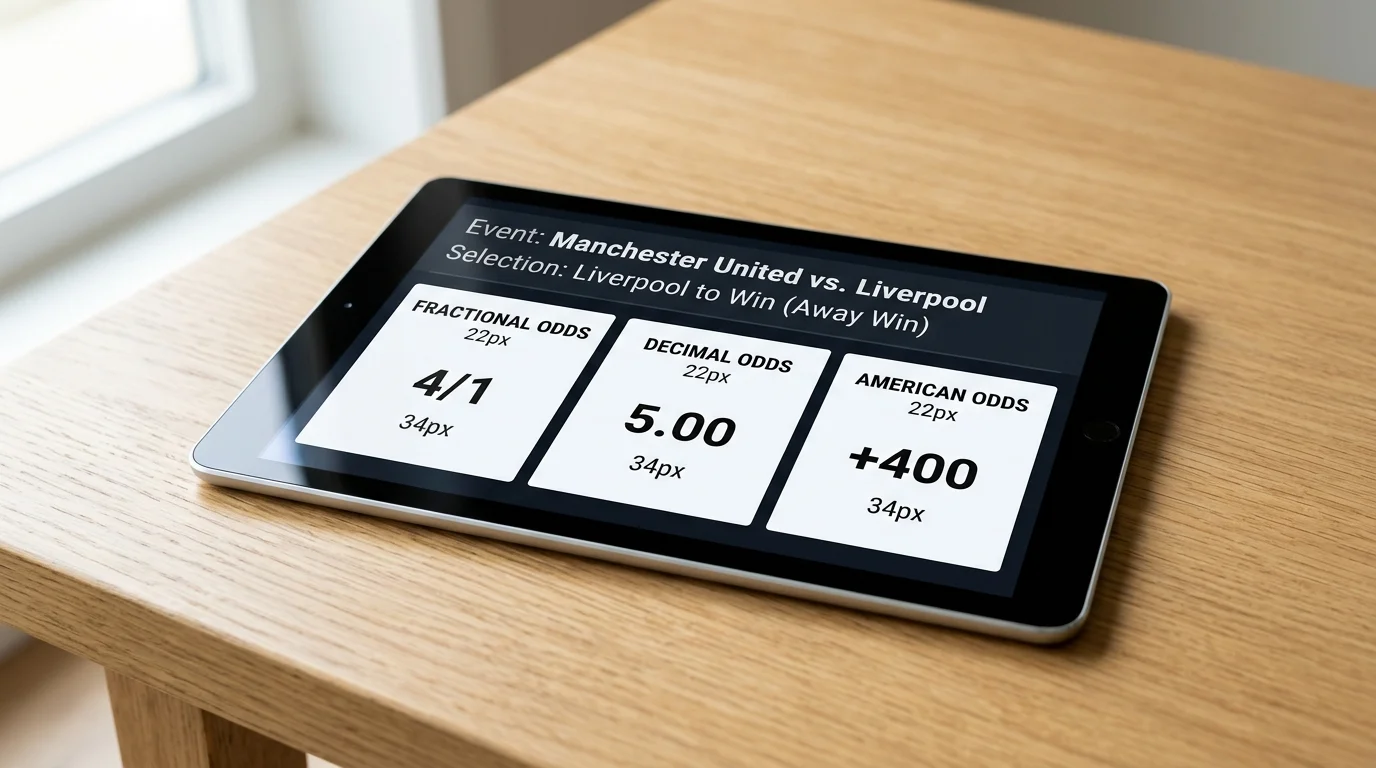
One practical wrinkle trips up British bettors more than any other, and it is the odds format. American sources quote everything in the moneyline format — that unfamiliar −110 you see plastered across US sites, which means staking £110 to win £100. UK books overwhelmingly present odds as fractions or decimals instead, and the translation is not always obvious. If you are reading American previews and want to convert their numbers into something your UK book will recognise, the breakdown of how to read American odds as a UK bettor walks through the conversion properly. Getting fluent in both formats is genuinely useful, because so much of the best NFL analysis is written for an American audience in American numbers.
And the responsible-gambling point is not a box to tick at the bottom of the page — it belongs right here, in the rules section, because it is part of the rules. Set a deposit limit before you start. Treat losses as the cost of the entertainment, never as money to chase. The same regulated operators that take your bet are required to offer you tools to control it, and using them is a sign of a confident bettor, not a nervous one. The system is built to keep you safe; the responsibility to use it well is yours.
Props as one product among many
For all the words I have spent mapping the wider market, the player prop is just one item on a long menu — and keeping that in perspective is healthy. The NFL betting palette runs from the spread and the moneyline through totals and into the granular individual markets we obsess over here.
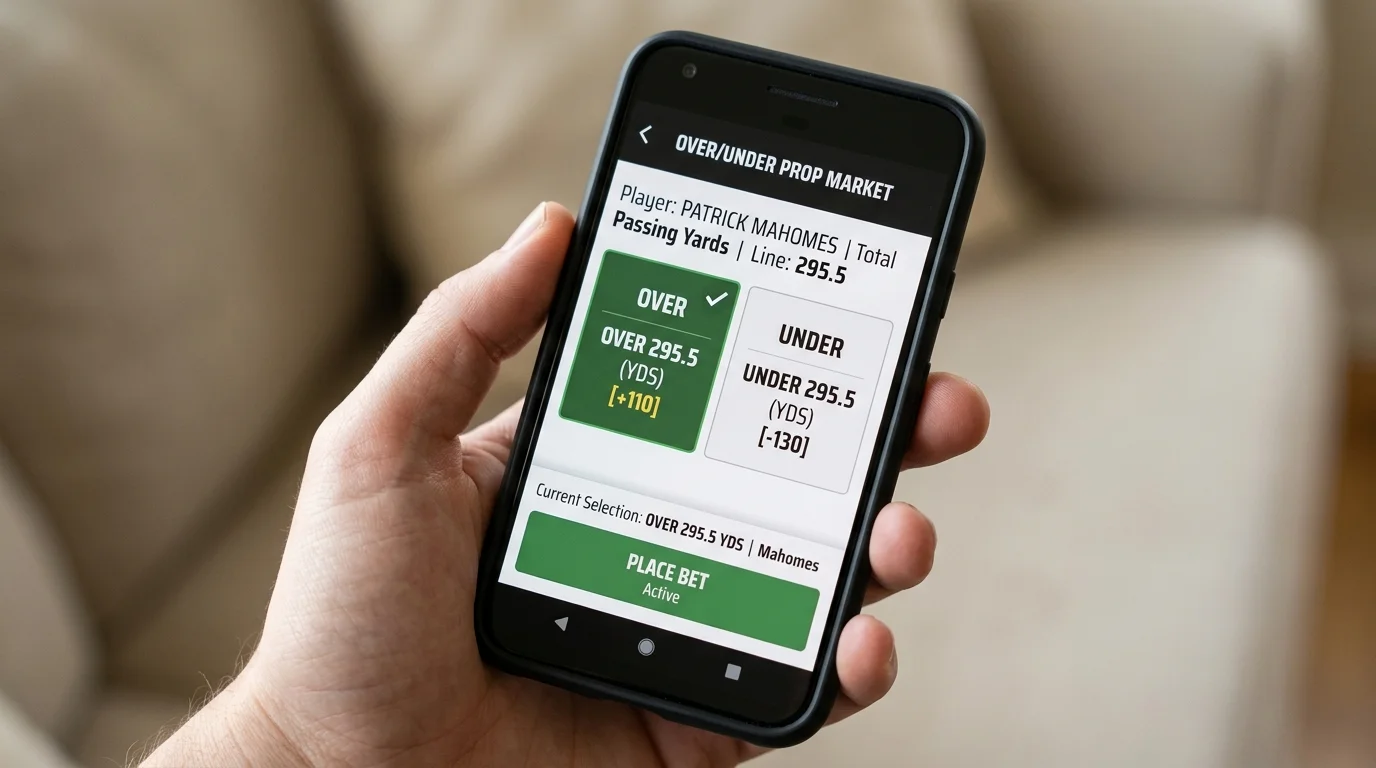
The hierarchy of preference is clearer than you might expect. Among NFL bettors, the spread is favoured by 61%, the moneyline by 52% and totals by 47%, while player props sit underneath those staples as the genuine growth engine of the market rather than its foundation. Props are no longer treated as a novelty — they have graduated into a core product — but they are still the layer you reach for once you understand the game beneath them. That sequencing matters. A prop is a bet on one player’s individual statistical line within a match, divorced from who wins; it sits on top of the game, not at its centre, and pricing it well demands that you understand the game first.
That is exactly why I treat the wider market context as the foundation for everything else on this site. You cannot sensibly evaluate whether a receiving yards line is generous if you do not grasp how thinly that market trades compared with the spread, or how much margin the book is likely carrying because NFL props attract less liquidity than domestic football. The map I have drawn here — a £16.8 billion regulated industry, a near-50% online share, a 13-million-strong NFL fanbase and a tightly supervised rulebook — is the terrain on which every prop decision gets made. Get the terrain right and the individual bets become legible. Skip it, and you are guessing in the dark inside one of the most sophisticated markets in the world.
Explore best nfl player prop bets for more NFL betting insights.
Reading the market before you read the line
If you take one thing from all of this, let it be a shift in posture. The British NFL bettor is not an outsider sneaking into an American pastime; you are a participant in a mature, regulated, online-dominated industry that happens to have a thriving and fast-growing NFL audience layered on top of it. The £16.8 billion of yield, the 46% online share, the eleven straight years of high street decline, the 13 million fans — these are not trivia. They are the conditions that determine how your markets are priced, how much margin you are fighting through and where the soft spots might hide.
The practical takeaway is to bet from a position of context rather than enthusiasm. Use a licensed operator, get comfortable converting odds formats, set your limits before you start, and never forget that the NFL props you fancy trade in thinner water than the football markets the books truly care about. Thin water cuts both ways: wider margins to overcome, but also more room for a careful bettor to find a price that has not been sharpened to the bone. The rest of this project goes deep on the methods for finding that room. This piece simply makes sure you know the size and shape of the market you are stepping into — because everything else makes more sense once you do.
Is betting on the NFL legal in the UK?
Yes. Betting on the NFL is entirely legal for adults aged 18 and over in the UK, provided you use an operator licensed by the Gambling Commission. The licence is what matters: licensed operators are bound by rules on fairness, fund protection and customer safety, and are overseen by a regulator with real enforcement powers. Avoid unlicensed offshore sites, which offer none of those protections.
How big is the UK sports betting market compared with other countries?
The regulated UK gambling industry posted a gross gambling yield of £16.8 billion for the year ending 31 March 2025, the first time it cleared £16 billion. Online now makes up 46% of that market, and within online betting, football leads on £1.3 billion of yield. While the United States now turns over far larger absolute sums, the UK remains one of the most mature and tightly regulated betting markets in the world relative to its population.
Do I pay tax on NFL betting winnings in the UK?
No. Betting winnings are not taxed at the point of the punter in the UK. The tax burden sits with operators rather than customers, so a British bettor keeps the full amount of any winning NFL bet. This differs sharply from some other jurisdictions where the bettor is liable, and it is one of the genuine structural advantages of betting within the UK system.
Why are UK odds shown as fractions, not American −110?
UK bookmakers traditionally present odds as fractions or decimals, while American sources use the moneyline format such as −110, which means staking £110 to win £100. The formats describe the same probabilities in different languages. Because so much strong NFL analysis is written for a US audience in American numbers, learning to convert between the formats is genuinely worthwhile for any British NFL bettor.
Created by the ”Best nfl Player Prop Bets” editorial team.