Reading American Odds as a UK Bettor: What -110 Really Means
 Available in US
The format that confuses every British bettor at first
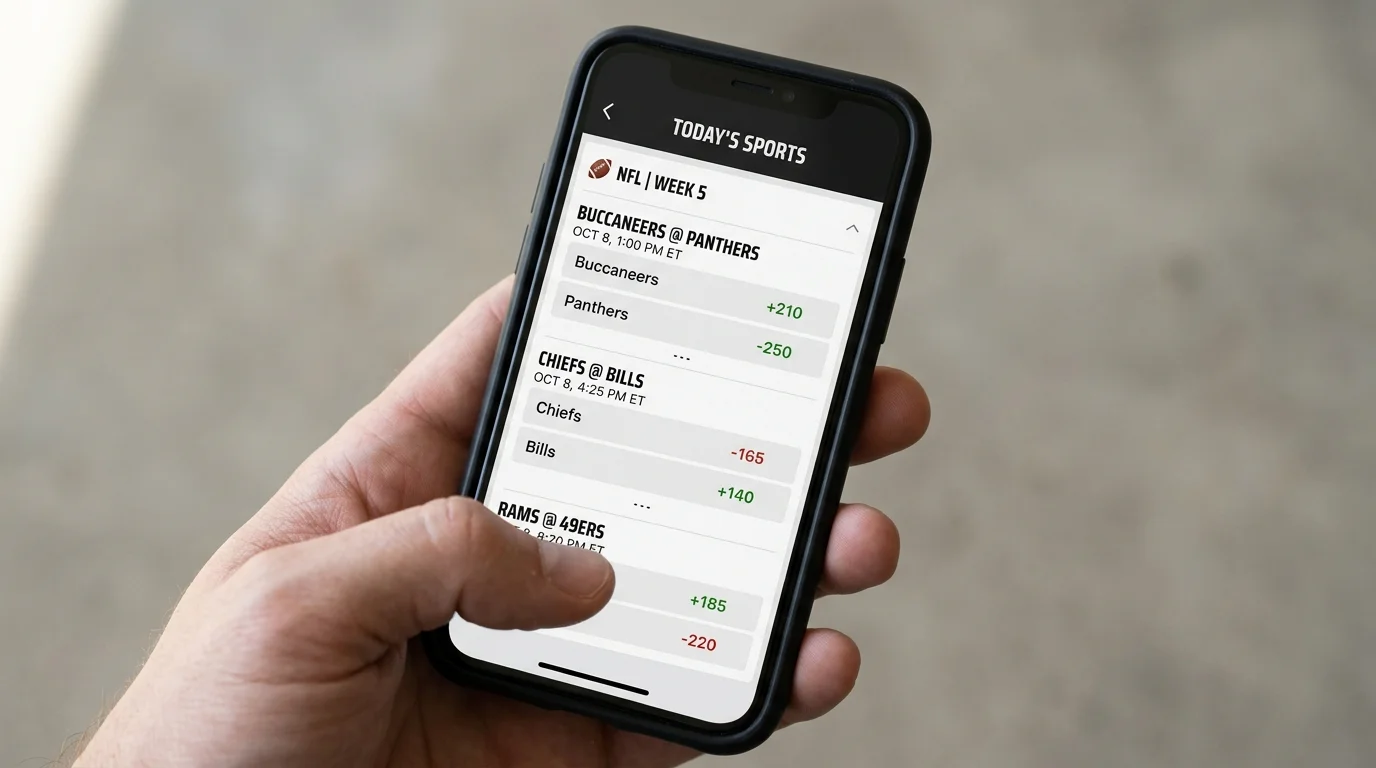
The first time I read an American odds board I genuinely thought a number was a typo. There it sat: -110, with a minus sign in front, and I had no idea whether that was good, bad, or a phone number. If you have grown up on fractional and decimal prices, American odds look like a different language, and they are. Reading American odds means understanding that the format expresses price relative to a baseline of 100, with a plus or minus sign telling you which way the stake-to-return relationship runs.
This matters for a UK bettor far more than it used to. So much NFL prop analysis, so many US sportsbook screens, and so many strategy guides are written in American odds that you simply cannot avoid the format if you want to engage with the wider prop market. You do not need to bet in American odds, your UK book will show you fractions or decimals, but you absolutely need to read them, because the best prop content speaks this dialect by default.
The good news is that the system is far simpler than it looks once you grasp the two cases. There is minus money and there is plus money, and every American price is one or the other. Learn what those two signs mean and the entire format unlocks. Spend ten minutes here and you will never squint at a -110 again, which is more than I can say for my first few months staring at them.
Apply your odds knowledge to calculate NFL prop vig and implied probability.
Minus money: what the favourite costs
A minus number tells you how much you must stake to win 100. That is the whole rule for minus money. A price of -110 means you stake 110 to win 100; a price of -150 means you stake 150 to win 100; a price of -200 means you stake 200 to win 100. The bigger the number after the minus, the heavier the favourite and the more you must risk for the same 100 of profit.
The 100 is just a unit, not a requirement to bet in hundreds. If you stake a tenth of that, you win a tenth of the profit, so at -110 a 11 stake wins 10. The ratio is what matters, not the size. Once you internalise “minus tells me what I risk to win 100,” every favourite price on an American board becomes readable at a glance, which is exactly the fluency you want when scanning prop analysis written for a US audience.
Most standard two-way props, the over/under markets that make up the bulk of player props, are quoted around -110 on each side in the American format. That is the baseline price, and understanding why it sits there rather than at a clean even-money figure is the key that unlocks how much the house is really charging you.
Plus money: what the underdog pays
A plus number tells you how much you win on a 100 stake. That is the mirror rule for plus money. A price of +150 means a 100 stake wins 150 in profit; +200 means 100 wins 200; +100 means 100 wins 100, which is even money. The bigger the number after the plus, the longer the underdog and the more a winning bet pays relative to your stake.
Plus money is where the longshot prop prices live, the anytime touchdown scorers and the first-scorer flyers that pay multiples of your stake. A +450 scorer means a 10 stake returns 45 in profit plus your tenner back. The temptation of those numbers is exactly why books offer them, because the long price often hides a wide margin. Player props already carry a vig of 6 to 10 per cent and frequently more, and that margin sits most heavily on the juicy plus-money longshots. The big payout and the big house edge tend to travel together.
The clean way to remember both cases: minus is what you risk to win a hundred, plus is what you win on a hundred. Two rules, one for favourites and one for underdogs, and the entire American board falls into place.
Why -110 is the number that matters most
If you learn one American price, learn -110, because it is the engine room of prop betting. A standard prop is quoted at -110 on both the over and the under, and that symmetrical-looking pair is not a fair coin flip. The minus sign on both sides is how the book builds in its margin: you risk 110 to win 100 whichever way you bet, and that extra 10 you must stake is the house edge made visible.
The practical consequence is a number every prop bettor should commit to memory. At -110, your break-even win rate is not 50 per cent; it is 52.38 per cent. You have to win more than 52 bets out of every 100 just to come out level, because the price is shaded against you. At the slightly better -105 the break-even drops to 51.22 per cent. That gap between 50 and 52.38 is the margin you are fighting on every standard prop, and it is why winning long-term takes a genuine edge rather than just being right slightly more than half the time. Understanding -110 is understanding why the house wins by default.
Visit best nfl player prop bets for all NFL odds and markets.
Turning American prices into decimals you trust
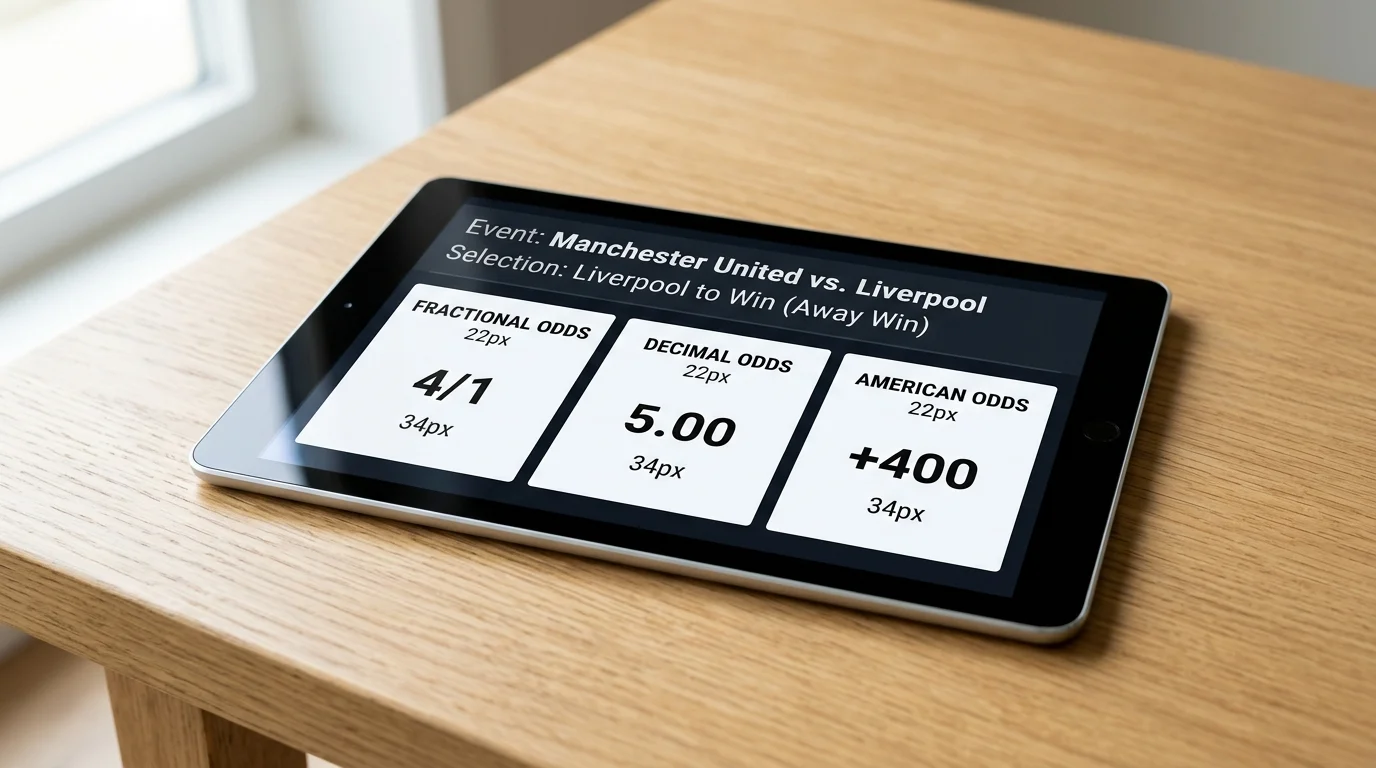
For a UK bettor, the final step is converting an American price into the decimal you actually understand, so you can compare it to your own book. The conversions are mechanical. For plus money, divide the number by 100 and add 1: +150 becomes 2.50 decimal. For minus money, divide 100 by the number and add 1: -110 becomes about 1.91 decimal, and -200 becomes 1.50. Even money, +100, is exactly 2.00.
Those few sums let you take any American prop price from a US screen or a strategy article and drop it straight into the decimal frame your UK book uses, which makes line shopping across formats possible. If you want the full picture of moving a single prop price between fractional, decimal and American formats, and sanity-checking each conversion with implied probability, I walk through it step by step in converting NFL prop prices across the three formats. Master the conversion and the American board stops being a foreign language and becomes just another way of writing a price you already know how to read.
Why do US sportsbooks use -110 instead of evens?
Because -110 is how the book builds in its margin on a two-way market. At even money you would stake 100 to win 100, but at -110 you stake 110 to win 100 on each side. That extra 10 you must risk is the house edge made visible. Quoting both the over and under at -110 lets the book take a cut whichever way the bet lands, which a clean even-money line would not allow.
How do I turn -110 into decimal odds?
For a minus price, divide 100 by the number after the minus, then add 1. For -110 that is 100 divided by 110, which gives about 0.91, plus 1 equals roughly 1.91 in decimal odds. A 10 stake at 1.91 returns about 19.10 in total, or 9.10 of profit. The same method works for any minus price, so -150 becomes 1.67 and -200 becomes 1.50.
Is +100 the same as 2.00 decimal?
Yes. Plus 100 is even money: a 100 stake wins 100 in profit, returning 200 in total. In decimal odds that is exactly 2.00, since decimal odds include your stake in the figure. So +100, 2.00 decimal and evens in fractional terms all describe the identical price, just written in three different formats that all return double your stake on a winner.
Created by the ”Best nfl Player Prop Bets” editorial team.