Defensive Matchups and Coverage: Reading the Other Side of Props
 Available in US
Half the bet is the eleven men nobody mentions
For years I projected props by staring only at the player I was betting, and I kept getting blindsided by the defence on the other side of the ball. That is the rookie error: a player prop is decided by a contest between an offensive player and a defence, yet most bettors analyse only the offence. Defensive matchups and coverage schemes shape what a player can produce just as powerfully as his own usage does, and learning to read the defensive side is what separates a complete prop analysis from half of one.
The reason coverage matters so much is that it dictates what kinds of plays are available to the offence. A defence is not a passive backdrop against which a receiver compiles yards; it is an active opponent scheming to take away specific things. A coverage that floods the deep field caps explosive plays; a coverage that crowds the line invites them. The defence is, in effect, helping to write the script for the player you are betting, and ignoring it means betting blind to half the game.
This dovetails with the principle that opportunity drives production. Usage tells you how often a player will get the ball, but the defensive matchup tells you what he can do with it when he does. The two together complete the picture: a receiver with a high target share against a coverage built to neutralise him is a very different bet from the same receiver against a coverage that leaves him room. Reading both sides is the only way to project a prop honestly.
Use coverage data to target NFL receiving yards props against weak secondaries.
Coverage basics every bettor should know
You do not need a coaching badge to bet defensive matchups, but you do need to grasp a few core concepts, and the most important is two-high coverage. Two-high means the defence keeps two safeties deep, splitting the back of the field between them to guard against long passes. The effect on props is direct: two-high coverage caps deep plays, taking away the explosive throws that build big receiving and passing totals, while conceding shorter completions underneath. Against a heavy two-high team, a deep-threat receiver’s ceiling shrinks dramatically.
The contrast that makes two-high meaningful is single-high coverage, where one safety plays deep and the other comes down toward the line. This leaves more room behind the defence for the deep ball but also more support against the run, and it generally allows the explosive passing plays that two-high suppresses. A field-stretching receiver facing a single-high defence has a far higher ceiling than the same receiver facing two-high, because the deep shots that define his value are actually available. Knowing which shell a defence favours tells you which props it will cap and which it will permit.
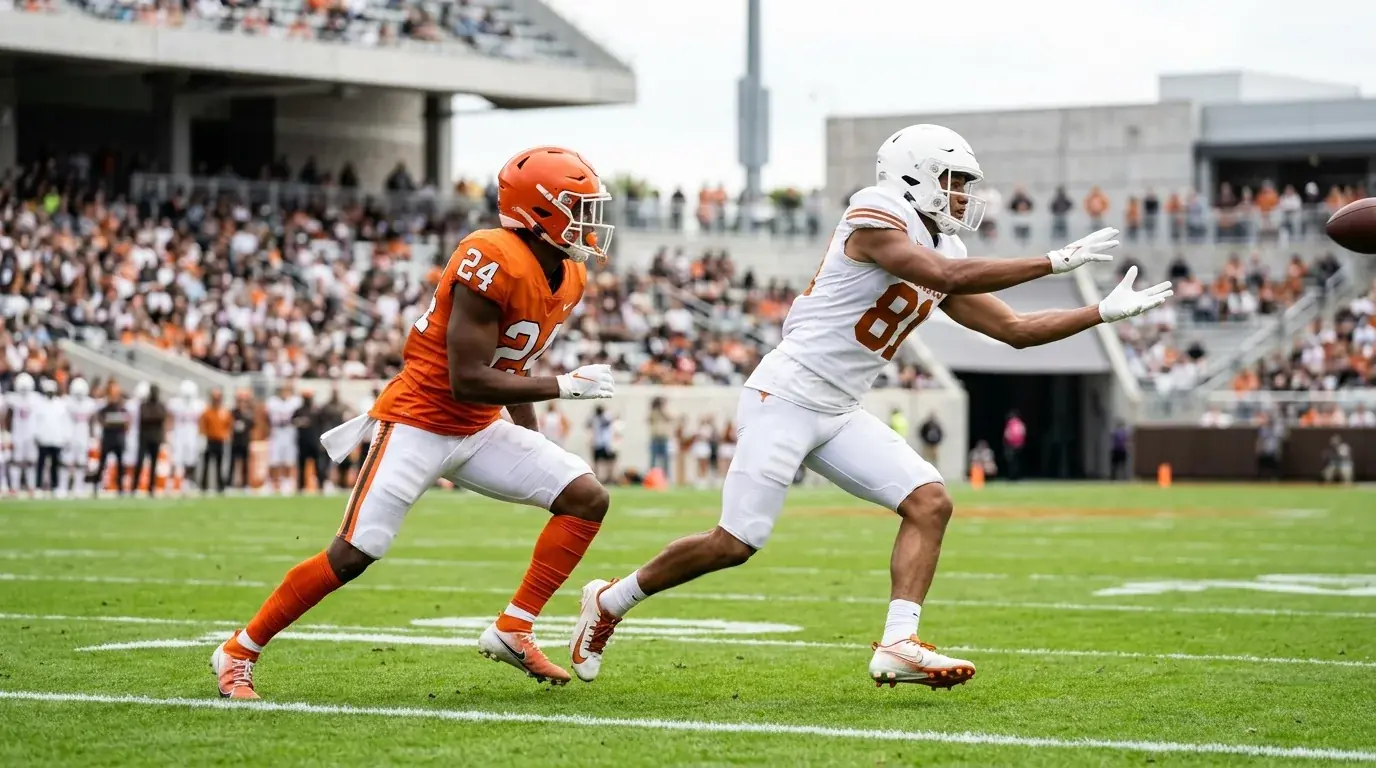
The third concept worth knowing is the shadow corner. A shadow corner is a defence’s best cornerback assigned to follow one receiver all over the field, rather than defending a fixed zone or side. When an elite shadow draws a number-one receiver, it tends to suppress both the quality and the quantity of that receiver’s targets, because the quarterback looks elsewhere to avoid the matchup. A genuine lockdown shadow can quietly strangle a star receiver’s prop, and it is one of the most direct defensive effects there is. The standard two-way prop already carries an overround of about 4.8 per cent at -110 each way, so a coverage edge has to be real to overcome the margin, and these concepts are real precisely because they change what the offence can attempt.
How matchups change the numbers
Translating coverage into prop adjustments is a matter of asking what each scheme gives and takes away for the specific player you are betting. Against a two-high team, I shade deep-threat receivers and the passing yardage of vertical offences toward the under, because the explosive plays are being schemed away, while I look more favourably on possession receivers and checkdown backs who feast on the underneath throws the coverage concedes. The same defence that caps a deep threat can lift a short-area receiver, because the yards have to go somewhere.
The shadow-corner matchup calls for a sharper adjustment. When a star receiver draws an elite shadow, his receiving props lean toward the under, both because his targets may drop as the quarterback avoids the matchup and because the targets he does get are harder to convert. But coverage is a system, so a shadow on the number-one receiver often frees up the number-two and the slot, whose props can quietly gain value as the offence redirects its attention. The defensive matchup does not just affect one player; it redistributes opportunity across the whole receiving corps, and reading that redistribution is where the edges hide. The detail of how coverage shapes receiving production specifically is worth pairing with this, and I cover it in how to bet receiving yards props.
Explore best nfl player prop bets for defensive NFL analysis.
Funnel defences and exploitable mismatches
The most useful concept for finding value is the funnel defence, because it tells you where a defence’s weakness will channel the offence. A funnel defence is one that is strong against one phase of the game and weak against the other, which funnels the opposing offence toward the phase it can attack. A defence stout against the run but soft against the pass funnels offences into the air, lifting passing and receiving props; a defence that shuts down the pass but yields on the ground funnels offences toward the run, lifting rushing props. Identifying the funnel tells you which side of the offence will be busy.
The clean mismatch is the other prize, and it is simpler. When a strong offensive player faces a weak defensive counterpart, an elite receiver against a struggling secondary, a powerful run game against a porous front, the production tends to follow, and the prop overs gain value. The art is in not overpaying for the obvious, because the most glaring mismatches are also the ones the market and the casual money price up first, often inflating the over past its real value. The genuine edges are in the subtler mismatches and funnels the crowd has not fully noticed. I look for the defence whose weakness will be exploited in a way the line has not fully absorbed, then bet the offensive player positioned to do the exploiting, always devigging the price first so I am betting value rather than just a good matchup. Read the funnel, find the quiet mismatch, and the defensive side of props becomes a source of edge rather than a blind spot.
What is two-high coverage and how does it cap deep props?
Two-high coverage keeps two safeties deep, splitting the back of the field to guard against long passes. This takes away the explosive deep throws that build big receiving and passing totals, while conceding shorter completions underneath. Against a heavy two-high team, a deep-threat receiver’s ceiling shrinks sharply, making his over a harder bet, while possession receivers and checkdown backs can benefit from the underneath throws the coverage concedes.
Does a shadow corner sink a receiving yards over?
It often pushes value toward the under. A shadow corner is a defence’s best cornerback assigned to follow one receiver everywhere. When an elite shadow draws a number-one receiver, it tends to reduce both the quantity and quality of his targets, since the quarterback looks elsewhere to avoid the matchup. That suppresses his yardage ceiling and can lift the props of the number-two receiver and the slot, who benefit from the redirected attention.
What is a funnel defence for prop betting?
A funnel defence is strong against one phase of the game and weak against the other, which channels the opposing offence toward the phase it can attack. A defence stout against the run but soft against the pass funnels offences into the air, lifting passing and receiving props. One that shuts down the pass but yields on the ground funnels offences toward the run, lifting rushing props. Identifying the funnel tells you which side of the offence will be busy.
Created by the ”Best nfl Player Prop Bets” editorial team.