NFL Receiving Yards Props: Betting Wide Receiver and Tight End Totals
 Available in US

One catch can make the whole bet
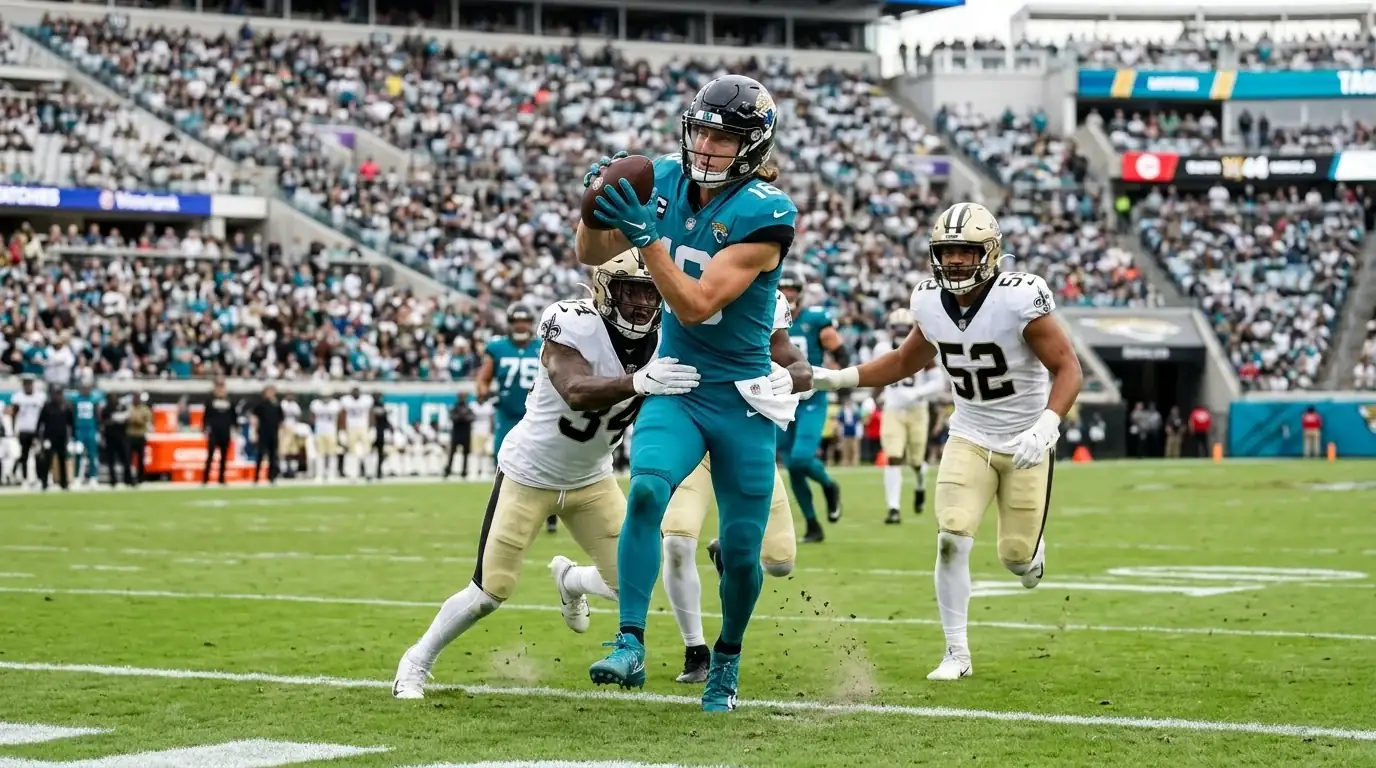
The most volatile prop I bet regularly is the one that looks the most familiar. A receiving yards prop is a wager on whether a wide receiver or tight end finishes a game above or below a posted yardage figure, settled on receiving yards alone. The number feels readable because we all know who the good receivers are. The danger is that a single 60-yard catch can decide the entire bet, which makes this market jumpy in a way the carry-heavy rushing prop is not.
Props have stopped being a side dish. They are now the fastest-growing bet type in sports betting, and the receiving market is one of the deepest on any NFL card, with totals posted for half a dozen pass-catchers on each side. That depth cuts both ways. It means more lines to choose from, and it means more lines the book has thought carefully about. Survey work still puts spreads ahead at 61 per cent of NFL bettors, but the energy in the market is in individual numbers like this one.
The receiving prop rewards a specific skill: separating volume from depth. A receiver can rack up yards on ten short catches or on three deep shots, and those two paths carry very different risk. Understanding which kind of receiver you are betting, and what kind of game produces his yards, is the whole battle. Get that right and the line on the screen starts to look a lot less authoritative.
Understand player props vs futures to pick the right bet type for receivers.
What the receiving total is pricing
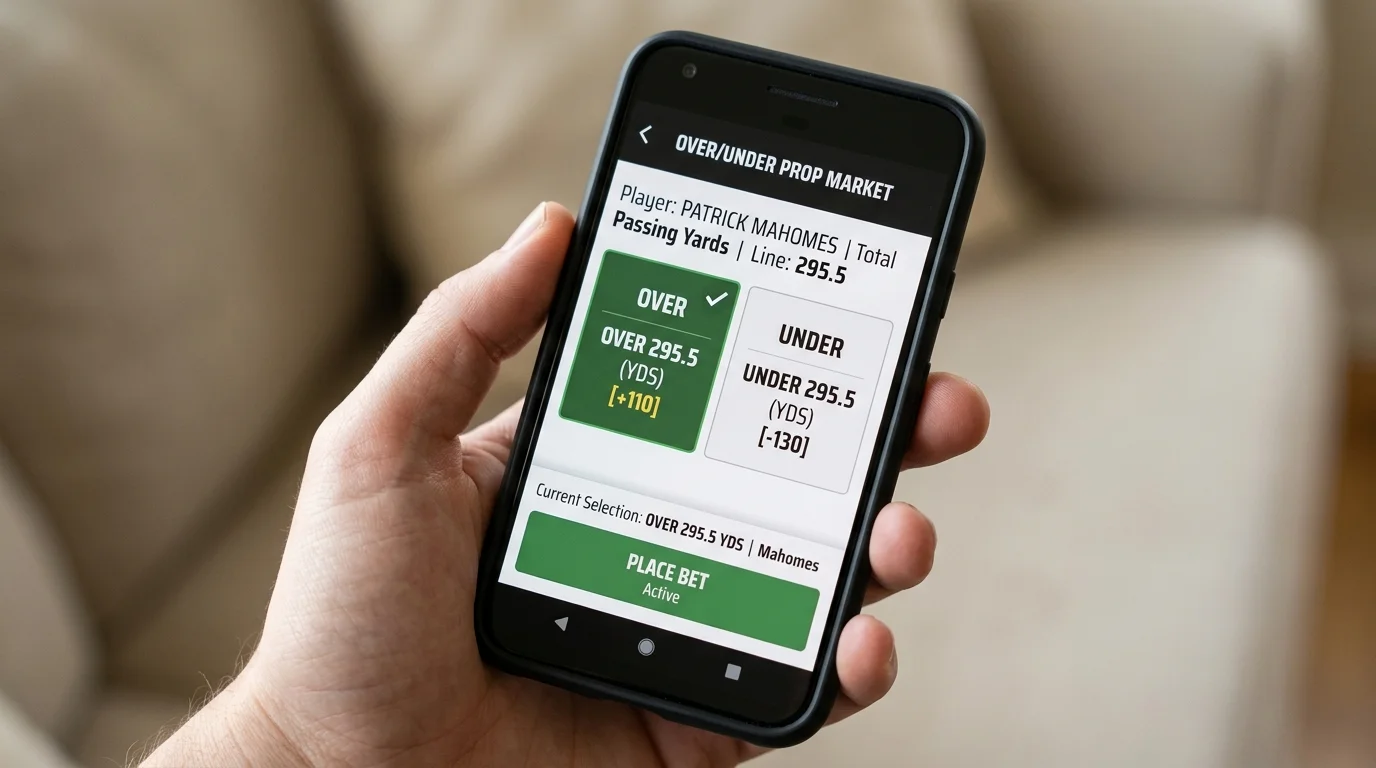
A receiving yards prop is a standard over/under, priced both ways and settled on the receiver’s own receiving yards. Yards after the catch count, yards in the air count, and a touchdown grab counts for its full yardage. What does not count is a rushing yard on an end-around or a yard gained on a lateral that the box score scores elsewhere. The prop is clean: catch the ball, gain the yards, they go on your number.
The pricing follows the usual prop structure. Two sides at -110 each produce an overround near 4.8 per cent, so the implied probabilities sum to about 104.8 per cent and the genuine break-even sits around 52.4 per cent rather than a clean half. On props that margin commonly stretches into the 6 to 10 per cent range, wider than spreads or totals. You are paying more juice here than you would on a side, and that extra cost has to be earned back through a real edge before the bet makes sense.
The mental model I use is volume times depth times script. Volume is how many targets the receiver draws. Depth is how far down the field those targets travel. Script is whether the game flows in a way that keeps the ball in the air. A receiving total is the book’s best guess at all three colliding, and your edge is finding the one input the market has weighted wrong.
Targets and air yards: where the yards come from
Years ago I stopped asking “is this receiver good?” and started asking “how many balls is he going to see, and how far away?” That shift in question is the single most useful habit I have built. Target share, the percentage of a team’s targets a receiver commands, is the foundation of receiving volume. A receiver pulling 28 per cent of his team’s targets has a high, repeatable floor. One bouncing between 12 and 22 per cent depending on coverage is a projection nightmare.
Air yards add the second dimension. Air yards measure how far a target travels in the air before the catch, and they tell you whether a receiver’s production is stable or spiky. A possession receiver living on short, high-percentage targets carries a steady total, because his floor and ceiling sit close together. A field-stretcher whose value comes from low-probability deep shots is feast or famine: he busts an under one week and crushes an over the next on a single play. I treat those two profiles completely differently, and the prop price rarely separates them as cleanly as the underlying usage does.
The reason this matters for betting is that the steady, high-volume receivers are the ones whose unders hold up, and the volatile deep threats are the ones whose overs occasionally pay big at the right price. Slot receivers, who run most of their routes from inside alignments on short and intermediate patterns, sit firmly in the steady camp, which is why their unders are a quiet favourite of mine. The deeper logic of why usage beats reputation is worth its own read, and I cover it in the context of touchdown markets too.
How the defence caps a receiving total
A receiver does not produce yards in a vacuum; there is a defence on the other side built to take them away, and ignoring it is how you lose overs you thought were locks. The two coverage ideas that matter most are shadow corners and two-high shells. A shadow corner is a defence’s best cornerback assigned to follow one receiver all over the field, and a genuine lockdown shadow can strangle a number-one receiver’s target quality and quantity at once. Backing a receiving over against an elite shadow is a tax I rarely choose to pay.
Two-high coverage, where two safeties sit deep to cap explosive plays, is the other yardage killer. It takes away the deep ball, which guts the ceiling of a field-stretching receiver while barely touching a possession receiver who works underneath. That is why coverage scheme should change which receiver you bet, not just whether you bet. The full picture of how schemes cap and unlock props deserves its own treatment, and I lay out the matchup-reading method in defensive matchups and coverage. Read the coverage before you read the line, and a lot of “obvious” overs reveal themselves as traps.
Visit best nfl player prop bets for complete NFL receiving markets.
Turning a read into a value bet
The value on a receiving prop is the gap between your projection and the book’s no-vig number, full stop. I devig the price first, because both sides at -110 are not a fair coin flip. Then I build a target-and-depth projection, convert it to a probability, and only bet when that probability clears the fair break-even with room to absorb the variance this market throws off. A thin edge on a volatile receiver is not really an edge; it is a hope with juice attached.
The softest receiving lines tend to sit on the third and fourth options, not the stars. The number-one receiver’s market is sharp and heavily traded, but the book has less reliable data on the rotational pieces, and that is where mispricing creeps in. Line shopping does the rest: the same receiver can be posted at 54.5 yards one place and 51.5 another, and over a season that yard-and-a-half compounds. Project, devig, shop. The order never changes, and neither does the discipline it demands.
What’s the difference between receiving yards and receptions props?
A receiving yards prop settles on total yardage gained through catches, so depth of target matters enormously. A receptions prop settles on the raw number of catches, regardless of how far each one travels. The yards market rewards big plays and is more volatile, while the receptions market rewards volume and tends to be steadier, since a short catch counts the same as a long one toward the total.
How does shadow coverage affect a receiving yards line?
A shadow corner is a defence’s top cornerback assigned to follow one receiver everywhere. When an elite shadow draws a number-one receiver, it tends to reduce both the quality and quantity of his targets, which suppresses his realistic yardage ceiling. That makes the over a harder bet and can quietly tilt value toward the under, even if the line itself has not moved much for it.
Why are slot receivers steadier for unders?
Slot receivers run most of their routes from inside alignments on short and intermediate patterns, so their production comes from volume rather than rare deep plays. That keeps their floor and ceiling close together, which makes their yardage totals more predictable. With less chance of a single huge catch blowing the number open, their unders behave more reliably than a deep threat’s would.
Published by the Best nfl Player Prop Bets team.