Closing Line Value on NFL Props: The Bettor’s Long-Term Scorecard
 Available in US

The metric that tells you the truth your record hides
For my first few years betting props I judged myself by one thing: did I win? It took me far too long to realise that win-loss over any short stretch is mostly noise, and that there is a better scorecard. Closing line value, or CLV, measures whether the price you got was better than the price the market settled on just before kick-off. Beat the closing line consistently and you are doing something right, regardless of whether last Sunday went your way.
The idea rests on a quiet truth about betting markets: the closing line is the sharpest number the book produces all week. By the time a prop closes, it has absorbed every injury update, every weather change, and all the sharp money that moved it. That final price is the market’s best estimate of the true probability. So if you regularly bet a number better than where the market closes, you are beating the most accurate forecast available, and that is the strongest evidence that your bets carry an edge.
This matters more now than ever because margins are climbing. The implied national hold on US books rose to around 10.2 per cent in 2025, up from 9.2 per cent the year before and 6.9 per cent back in 2019. As the house edge widens, beating the closing line becomes both harder and more important, because it is the cleanest proof that you are finding value before the market corrects itself. CLV is not a vanity metric; it is the discipline that separates bettors with a real edge from those riding variance.
Combine CLV tracking with NFL game script and pace analysis for better timing.
What closing line value actually is
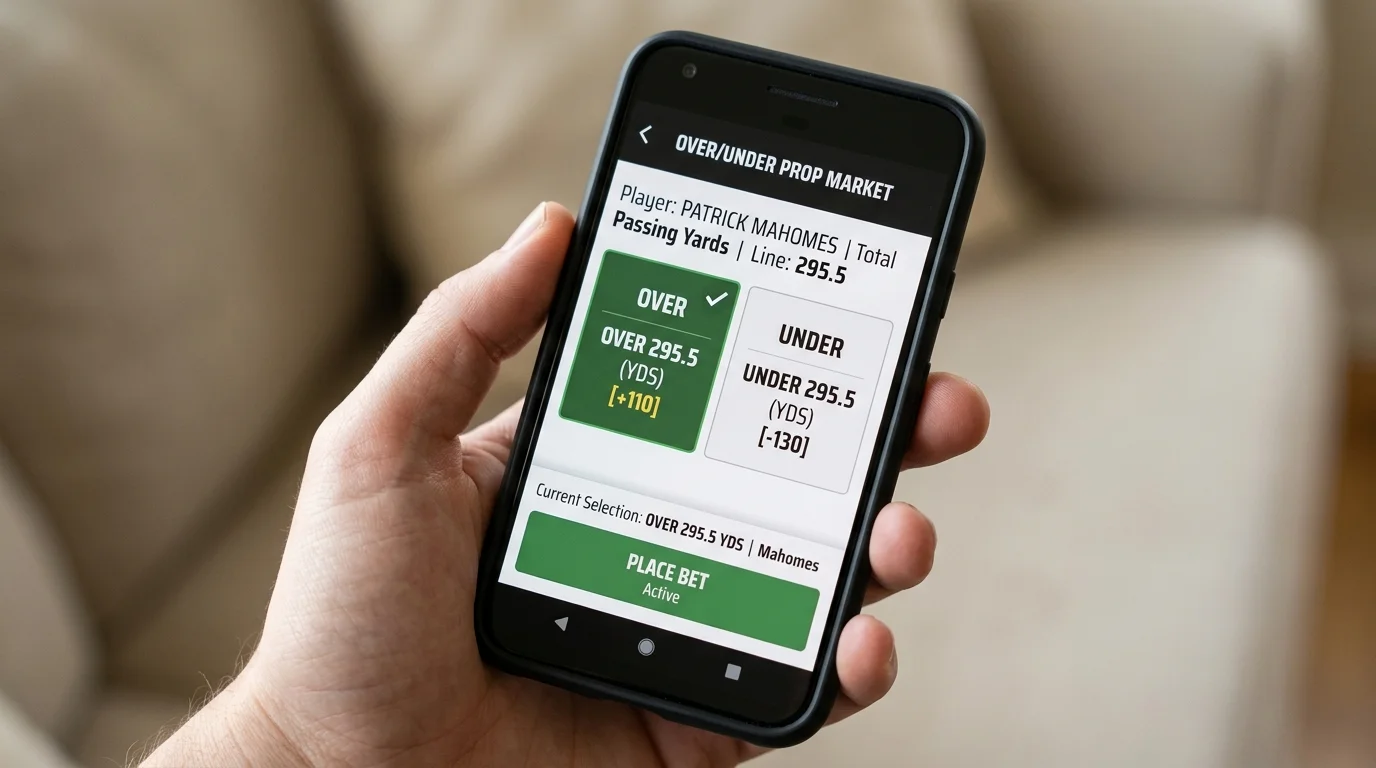
Closing line value is the difference between the price you took and the price at which the market closed. Say you back a receiving yards over at 1.95 decimal on Thursday, and by kick-off on Sunday the market has moved that same over to 1.83 because money and information pushed it. You took the bet at a better price than it eventually settled at, which means you have positive CLV. The market came to you, not the other way around.
The reverse is just as telling. If you bet an over at 1.83 and it drifts out to 1.95 by close, the market moved against your number, and you have negative CLV. You bet a worse price than the eventual fair estimate, which suggests your read was on the wrong side of the information that arrived after you bet. Over a single bet this means little; over hundreds, the pattern is a verdict on your process.
The reason CLV works as a scorecard ties back to that idea of the closing line as the sharpest number. If the closing price is the market’s most accurate forecast, then consistently securing better prices than the close means you are systematically finding value the market has not yet priced. That is precisely what an edge looks like, expressed as a measurable habit rather than a lucky run.
Why it matters more than your win rate
Here is the uncomfortable lesson that took me years to accept: you can have a brilliant week and a broken process, or a losing week and a genuine edge. Win rate over a small sample is dominated by variance, especially on props, which swing hard on single plays. A bettor can go 3-7 across a fortnight and still have made ten well-priced, positive-CLV bets that will profit over time. The result lied; the CLV told the truth.
This is exactly why props reward the CLV mindset. Player props, and especially the more exotic ones on secondary players, sit in a less efficient market because bookmakers have less historical data to price them tightly. That inefficiency is your opportunity, but it also means single-game results are wildly noisy. CLV cuts through the noise by measuring whether you are beating the price rather than whether the ball bounced your way on a given Sunday. If your props consistently beat the close, the profit follows even when individual results frustrate you.
The practical mindset shift is to stop celebrating wins and start celebrating prices. A bet that loses but beat the closing line was a good bet badly resolved. A bet that wins but had negative CLV was a bad bet that got lucky. Train yourself to feel the difference, and you stop chasing the dopamine of results and start building the habit that actually compounds. Securing those better prices in the first place is the front-end skill, and it lives in line shopping NFL props, where finding the best available number is half of beating the close.
Explore best nfl player prop bets for edge-finding NFL tools.
How to track CLV bet by bet
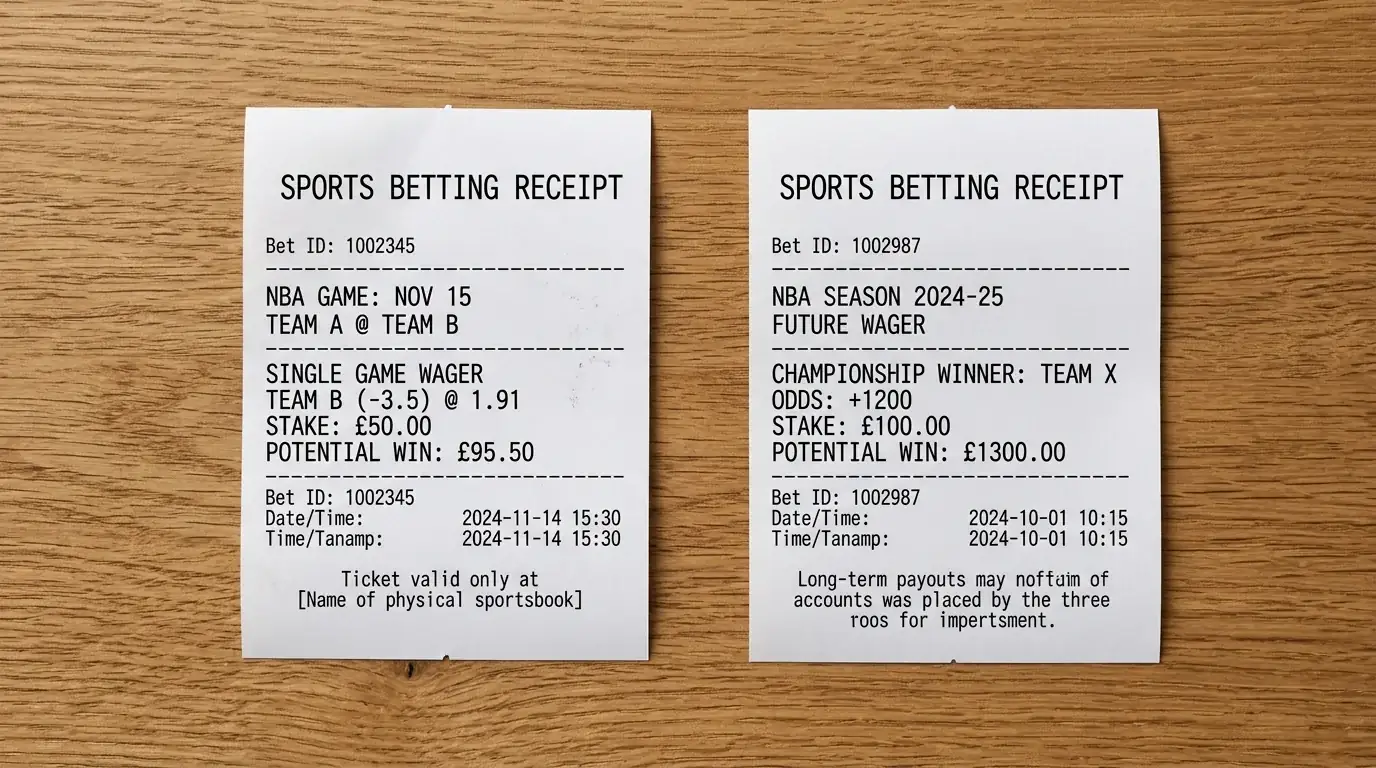
Tracking CLV sounds technical but is genuinely just bookkeeping. For every prop I place, I record the price I took and the line attached, then I note the closing price on that same market just before kick-off. The closing number is the last available price before the market goes off, which most books and odds screens display right up to the start. The gap between the two is your CLV on that bet, logged in a spreadsheet alongside the result.
The figure to watch is the running pattern, not any single line. Standard prop pricing gives you the reference points: a two-way prop at -110 each way carries an overround of about 4.8 per cent, so the fair, no-vig closing probability is what you are really comparing against once you strip the margin out of both your price and the close. Do that consistently and a clear signal emerges over a few dozen bets. If you are routinely beating the no-vig close, your process has an edge worth scaling. If you are routinely behind it, no winning streak will save you, and the honest move is to fix the process. A spreadsheet with three columns, your price, the closing price, and the result, is all the infrastructure you need to know which bettor you actually are.
Can I have positive CLV and still lose money short-term?
Absolutely, and it is common on props. Positive closing line value means you consistently beat the market’s final price, which is strong evidence of an edge, but variance still decides individual results. Props swing on single plays, so you can beat the close on ten bets and lose six of them in a given fortnight. Over a large sample the edge shows up as profit, but short-term losses with positive CLV are entirely normal.
Where do I record the closing line on a prop?
The closing line is the last available price on a market just before kick-off, which most bookmakers and odds-comparison screens display right up to the start of the game. For each prop you bet, note the price you took, then check that same market just before it goes off and record where it closed. Logging both figures in a simple spreadsheet lets you measure the gap, which is your CLV on that bet.
Is beating the close better proof than win rate?
Over any short stretch, yes. Win rate is dominated by variance, especially on volatile props, so a good or bad fortnight tells you little about your process. Beating the closing line measures whether you are securing better prices than the market’s sharpest final estimate, which is the clearest evidence of a genuine edge. A bettor who consistently beats the close will profit over time, even when individual results disappoint.
Published by the Best nfl Player Prop Bets team.