The NFL’s 2025 Prop Memo: Which Bet Types Got Banned and Why
 Available in US
The week the league redrew the prop map
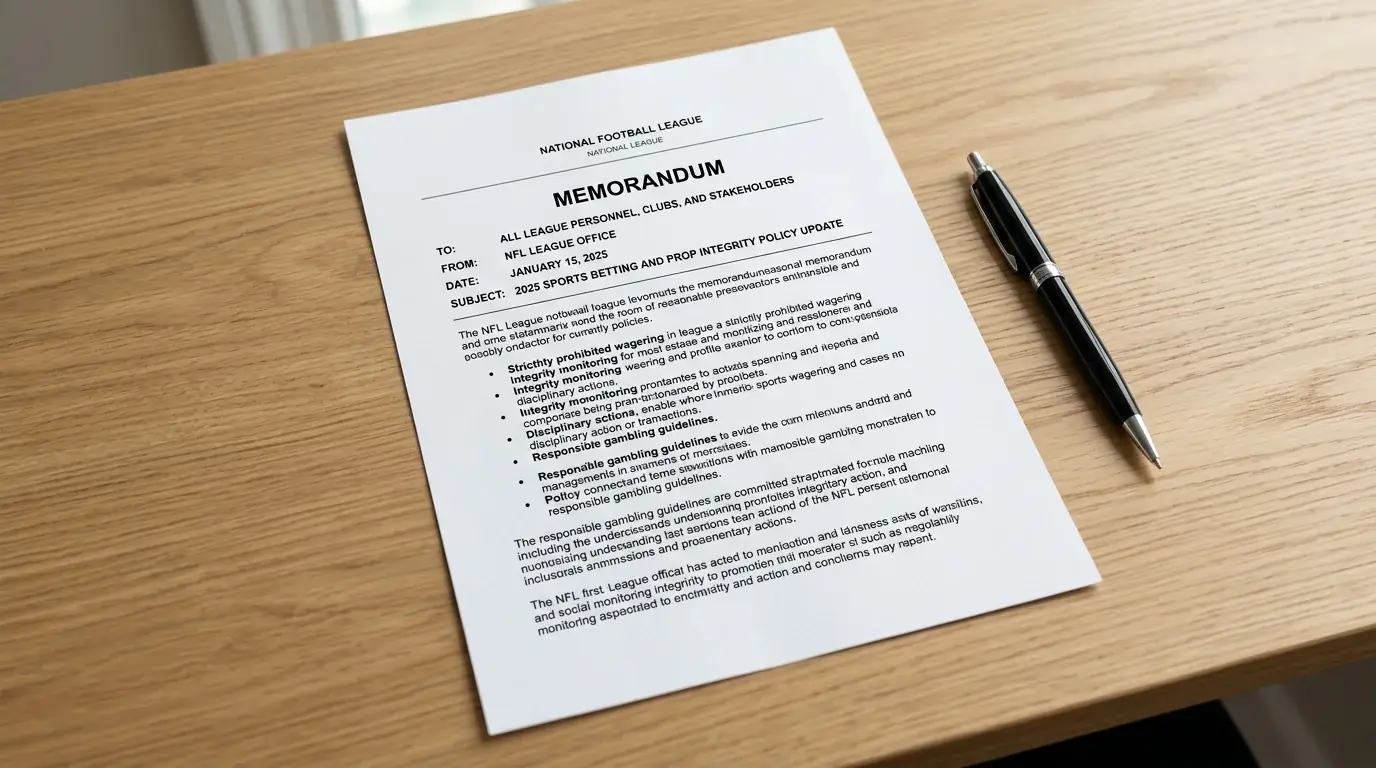
In November 2025 the NFL did something that should matter to every prop bettor, even casual ones an ocean away: it told its clubs which prop bets it wanted gone. The memo identified four categories of proposition wagers the league considers off-limits, and it did so not as a vague gesture but as a formal statement of policy. If you bet NFL props, the menu you choose from is being shaped directly by that document, which is reason enough to understand exactly what it said.
What makes this memo different from the usual responsible-gambling boilerplate is that it targets specific bet types, not behaviour. The league is not asking bettors to gamble responsibly; it is telling the betting industry that certain markets create unacceptable integrity or reputational risk and should not exist. That is a meaningful shift, because it means the league is now an active force in deciding what you can and cannot wager on, and the four categories it named tell you precisely where it has drawn the line.
The timing is no accident either. Public sentiment toward legalised betting has soured noticeably: a 2025 Pew Research survey found 43 per cent of American adults consider legalised sports betting bad for society, up from 34 per cent in 2022, with 40 per cent calling it bad for sport. A league watching that mood shift has every incentive to be seen acting on integrity, and the prop memo is a large part of how it chose to do so.
Learn why the NCAA wants college prop bets banned and what it means for integrity.
The four prohibited categories
The memo named four distinct categories of props the NFL wants curtailed, and each targets a different kind of risk. The first covers offensive bets, wagers tied to player injuries or to fan behaviour, the sort of market the league considers distasteful regardless of integrity concerns. The second covers bets on officiating, where wagering on referees’ decisions invites suspicion of the people meant to be neutral. Both of these are as much about the league’s image as about manipulation.
The third and fourth categories are the integrity heavyweights. The third covers bets determined by a single person in a single isolated event, the micro-bet style of wager where one player’s one action in one moment decides the outcome, which the league sees as the most manipulable bet possible. The fourth covers bets on outcomes that could be predetermined, anything where the result might be arranged in advance. Together, the four categories sketch a clear philosophy: ban what is offensive, ban what undermines officials, and ban what is easiest to fix.
The league framed all of this within a wider integrity programme rather than as a one-off ban. Beyond these prohibited categories, the NFL described engaging in comprehensive, year-round educational, monitoring and, where necessary, disciplinary work to protect the game’s integrity. The message was that the prop restrictions are one tool among many, not a standalone fix. The college game has moved in parallel on its own player-prop concerns, which I cover in the NCAA’s push against college player props, and the two efforts share a great deal of their logic.
Why the league moved when it did
The deeper question is why now, and the answer is a convergence of pressure the league could no longer ignore. Betting scandals across other major sports had put manipulation in the headlines, the granular micro-bet products had multiplied to the point where single-play wagers were everywhere, and the public mood had turned visibly against the whole enterprise. A league that prizes its reputation above almost everything read those signals and decided that visible action on the riskiest markets was overdue.
That souring public sentiment is the backdrop that makes the timing make sense. With 43 per cent of American adults now viewing legalised betting as bad for society and 40 per cent as bad for sport, both up sharply in just a few years, the league faced a reputational environment it had not seen during the gold-rush phase of expansion. Acting on the most manipulable and most distasteful bet types is a way to demonstrate that the league takes integrity seriously while the broader betting relationship, which is lucrative, continues. It is integrity policy and image management at the same time.
The honest reading is that the memo is both genuine and strategic. The integrity concerns about micro bets and predetermined outcomes are real and well-founded. But the league also benefits from being seen to act decisively as scrutiny mounts. Both things are true, and a bettor understanding the memo should hold both in mind: the restrictions address real risk, and they arrived precisely when the league most needed to be seen addressing it.
See also: best nfl player prop bets for top NFL wagering guides.
What it means for everyday bettors
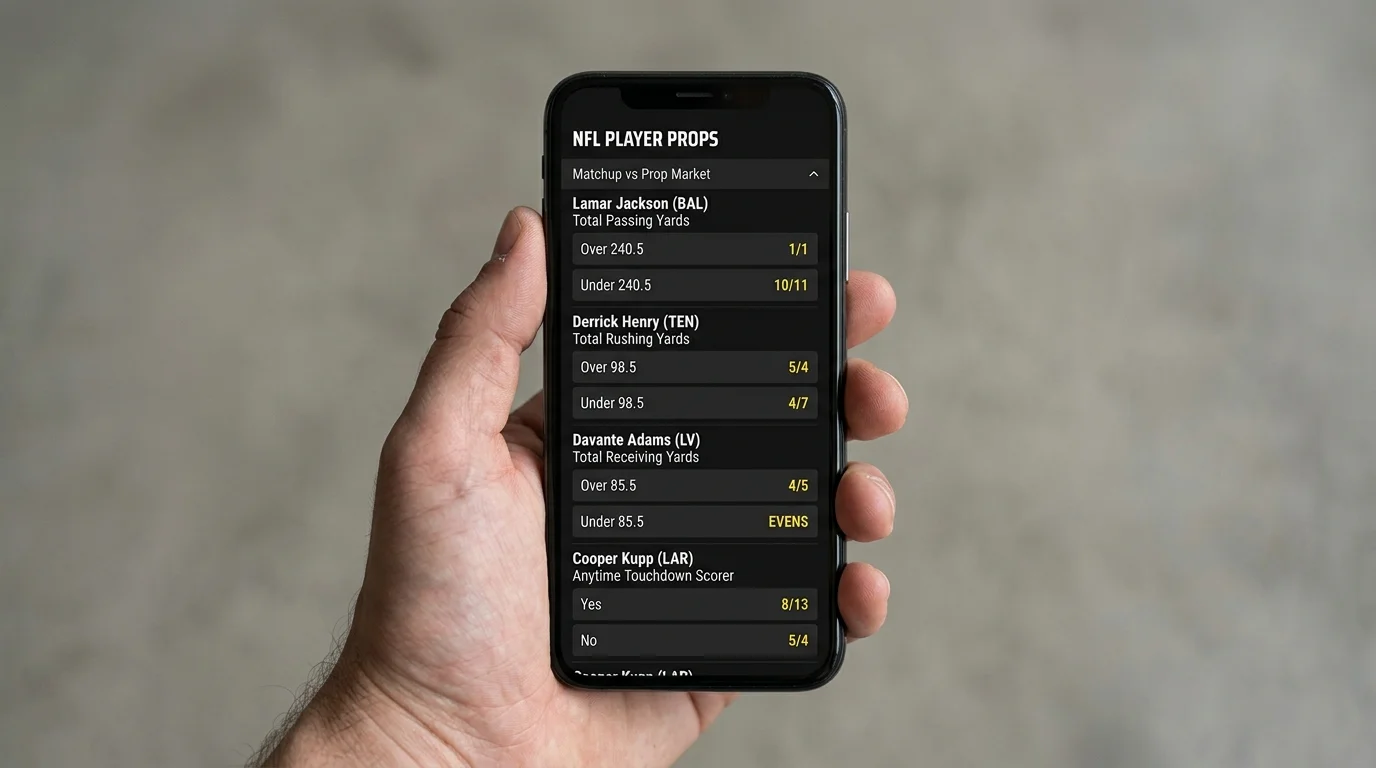
Here is the reassurance most bettors actually want: the props you probably enjoy are untouched. Standard yardage props, touchdown markets, receptions, the everyday over/under bets on player statistics, none of these fall into the four prohibited categories. The memo targets offensive bets, officiating bets, single-play micro bets, and predetermined-outcome bets, which are a small and specific corner of the market. Your quarterback passing yards line and your anytime touchdown scorer are not going anywhere.
What you may notice is a quieter narrowing at the granular and exotic edges. The single-play micro markets are being restricted, some distasteful novelty-style bets may disappear, and books are likely to be more conservative about offering anything that brushes against the prohibited categories. For most bettors this is invisible, because the affected markets were never the core of a sensible betting approach anyway. The memo essentially formalises that the responsible centre of the prop market is fine while trimming the risky fringes.
For a UK bettor, the practical effect is mostly indirect. UK books operate under their own UKGC regulation, but they take their lead on what NFL markets to offer partly from the league’s posture, so the prohibited categories will tend to fade from British menus too. The takeaway is simple: keep doing the value-focused, statistical prop betting that the memo never targeted, and treat the disappearance of single-play and novelty exotics as a tidying-up of markets that offered entertainment rather than edge. The core of the game is intact; only its riskiest fringe is being pruned.
Which four prop categories did the NFL prohibit?
The November 2025 memo named four: offensive bets tied to injuries or fan behaviour; bets on officiating; bets determined by a single person in a single isolated event, which is the micro-bet category; and bets on outcomes that could be predetermined. The first two are largely about the league’s image, while the latter two target the bets seen as easiest to manipulate. Together they sketch a clear integrity philosophy.
Are normal yardage and touchdown props still allowed?
Yes. Standard yardage props, touchdown markets, receptions, and the everyday over/under bets on player statistics do not fall into any of the four prohibited categories. The memo targets a small, specific corner of offensive, officiating, single-play, and predetermined-outcome bets. The core statistical props that most people actually bet are untouched, so your passing yards line and anytime touchdown scorer remain on the board.
Did the memo ban all in-play props?
No. The memo did not ban live or in-play betting as a whole. It targeted the single-play micro-bet style of wager, where one isolated play decided by one person settles the bet, which is a specific subset of granular markets. Ordinary live props that settle on a full game’s worth of statistics are not in the prohibited categories, though books may be more conservative around the most granular play-by-play markets.
Published by the Best nfl Player Prop Bets team.