How Weather Moves NFL Passing Props: Wind, Rain and Cold
 Available in US
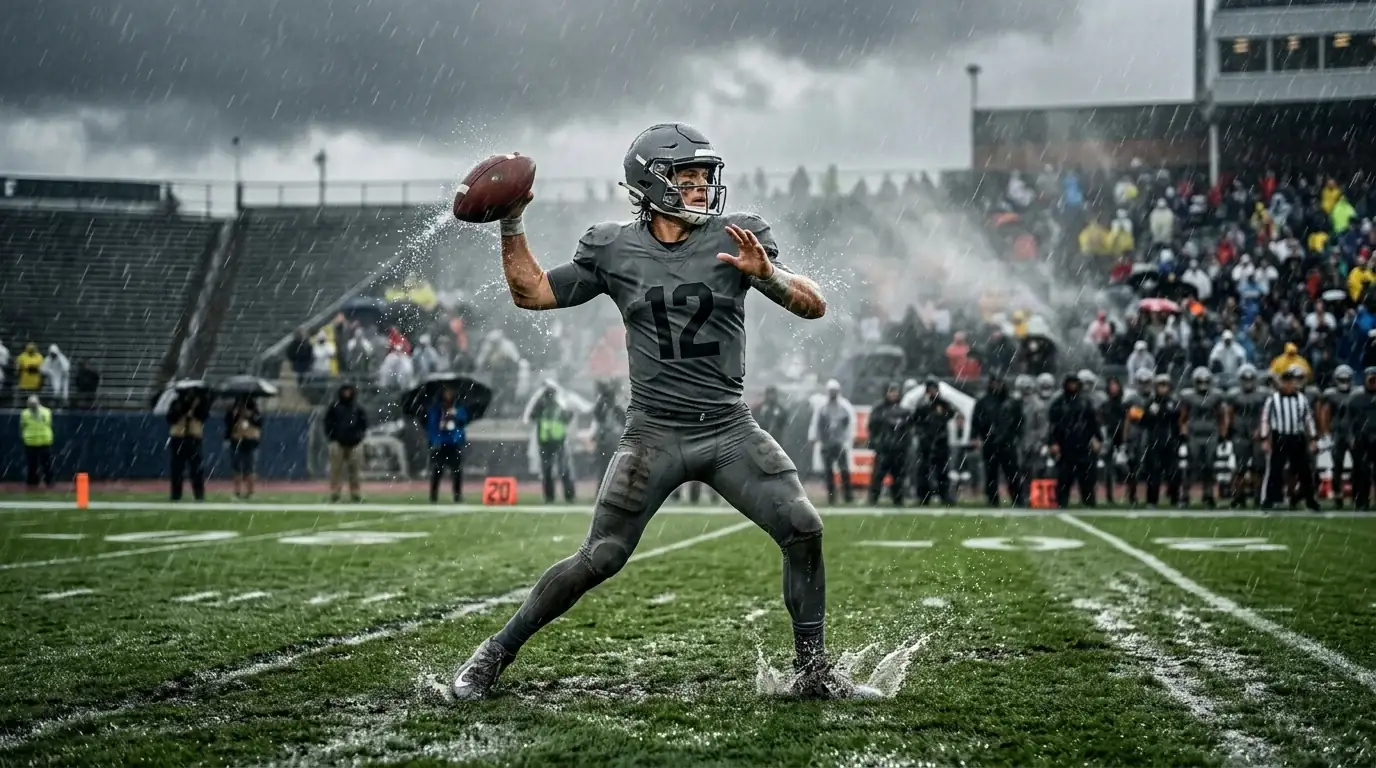
The forecast that beats the film
I have spent more profitable Sundays reading weather apps than game film, and I am not embarrassed to admit it. Weather is one of the most powerful and most underrated forces on NFL passing props, capable of shifting a quarterback’s realistic yardage by a wide margin in a single afternoon. The reason it is underrated is that casual bettors look at a passer’s season average and a juicy matchup, while the wind quietly rewrites the whole game before a snap is played.
What makes weather such a clean angle is that it acts on the passing game specifically and predictably. Run games are largely weatherproof, a handoff in a gale gains roughly what it would in a dome, but the passing game depends on a thrown ball travelling accurately through the air, and the air is exactly what weather disrupts. So when conditions turn, the effect concentrates on precisely the markets we are betting: passing yards, passing touchdowns, receiving lines. The signal is targeted, which makes it usable.
The market does account for weather, but imperfectly, and the imperfection is where the money is. Books adjust their passing lines for forecasts, yet they do so with lag and uncertainty, and props already carry a steep margin of 6 to 10 per cent that you have to beat regardless. A bettor who watches forecasts closely and understands how each condition bites can find passing lines that have not fully absorbed the weather, which over a season is one of the more durable edges available.
Factor weather into NFL passing touchdowns props for sharper predictions.
Wind is the one that matters
If you remember one thing about weather and passing, make it this: wind is king, and nothing else is close. A strong wind attacks the passing game at its most vulnerable point, the flight of the ball, turning accurate deep throws into prayers and forcing offences to abandon the very plays that build big yardage totals. Rain makes the ball slippery, cold stiffens hands, but wind alone can functionally cap a passing attack no matter how talented the quarterback.
The mechanism is simple physics. A pass thrown into or across a serious wind loses distance and accuracy, so deep shots stop being viable and coordinators dial up short throws and runs instead. That shift collapses a quarterback’s yardage ceiling, because the explosive plays that push a passer past a high total simply disappear from the playbook. A passing line set on the assumption of a normal aerial game becomes a strong under candidate the moment a genuine wind enters the forecast, because the offence will not be playing the game the line was priced for.
The practical question is where the threshold sits, and experience points to serious wind, the kind that visibly affects ball flight, as the trigger to fade passing overs. A gentle breeze does little; a sustained strong wind changes everything. I treat wind as a binary-ish signal: below a meaningful threshold I largely ignore it, and above that threshold I lean hard toward unders on passing and toward the run game benefiting. The general mechanics of how a passing line is built and moved are worth pairing with this, and I lay them out in how to bet the quarterback total, where wind sits among the line’s key drivers.
Rain, cold, and the dome question
Rain and cold matter, but they are second-order compared with wind, and treating them as equals is a common mistake. Rain makes the ball slick and footing uncertain, which nudges offences toward the run and shaves a little off passing efficiency, but a skilled quarterback can still move the ball through moderate rain in a way he cannot through a gale. Cold stiffens hands and hardens the ball, with a modest dampening effect on the passing game, but again it rarely transforms a game the way wind does. Both are worth a small downward adjustment to a passing projection, not a wholesale rethink.
Domes flip the entire question. A game played indoors removes weather from the equation completely, no wind, no rain, no cold, which is why dome passing environments are so consistent and so often favour the over. There is no forecast to fade and no condition to dampen the aerial game, so the passing line in a dome reflects pure matchup and pace. That removal of variance is itself information: a dome game is the cleanest passing environment there is, and any weather-based edge you might hunt outdoors simply does not exist there.
The way I use this hierarchy is to weight my weather attention sharply toward wind, apply gentle adjustments for rain and cold, and treat dome games as weather-neutral. A bettor who panics over light rain while ignoring a stiff wind has the priorities backwards. The yardage props already carry a margin you must overcome, so the weather adjustment has to be real to matter, and only wind, and to a lesser degree heavy rain or severe cold, clears that bar reliably.
See also: best nfl player prop bets for situational NFL analysis.
Why the books are slow, and how to use it
The edge in weather betting is not knowing that wind hurts passing, everyone knows that. The edge is timing, because books adjust to forecasts more slowly and conservatively than you might expect. A passing line is set days ahead on early forecast assumptions, and when a forecast worsens, say a windy system firms up the day before kick-off, the book does move its number, but often not far enough and not fast enough relative to the real impact on the game.
That lag is the exploitable gap. Weather forecasts sharpen as the game approaches, and a bettor watching closely can act on a deteriorating forecast before the book has fully repriced. The window is narrow and the books are not asleep, but the combination of conservative adjustment and natural lag means a worsening wind forecast can leave a stale, beatable passing line on the board for a time. I check forecasts repeatedly through the week and especially close to kick-off, looking for exactly that gap between what the weather will do and what the line currently assumes.
The discipline, as ever, is to convert the read into a fair-priced bet rather than just betting the weather. I devig the passing line, build a weather-adjusted projection, and bet only when the gap clears the steep prop margin. Weather is a genuine edge, but it is an edge you capture by being faster and more precise than the book’s forecast adjustment, not simply by knowing that wind is bad for throwing. Anticipate the line’s lag, and the weather angle pays.
At what wind speed should I fade passing overs?
The trigger is serious wind, the kind that visibly affects the flight of the ball, rather than a gentle breeze. Below a meaningful threshold, wind does little and can largely be ignored; above it, deep throws become unreliable and offences turn to the run, collapsing a quarterback’s yardage ceiling. A sustained strong wind is the clearest signal to lean toward passing unders, because the offence will not be playing the aerial game the line was priced for.
Do domes remove the weather edge entirely?
Yes. A dome game has no wind, rain, or cold, so weather simply does not factor into the passing line, which instead reflects pure matchup and pace. That makes dome passing environments very consistent and removes any weather-based angle you might hunt outdoors. The absence of weather is itself useful information: a dome is the cleanest aerial environment there is, so do not look for a weather edge that cannot exist indoors.
How fast do books adjust to a forecast change?
More slowly and conservatively than the real impact often warrants. A passing line is set days ahead on early forecast assumptions, and when a forecast worsens, the book moves its number but frequently not far or fast enough. Forecasts sharpen closer to kick-off, so a bettor watching closely can act on a deteriorating wind forecast before the line fully reprices. That lag between forecast and adjustment is the exploitable gap.
Written by the editors at Best nfl Player Prop Bets.