NFL Passing Yards Props: How to Bet the Quarterback Total
 Available in US
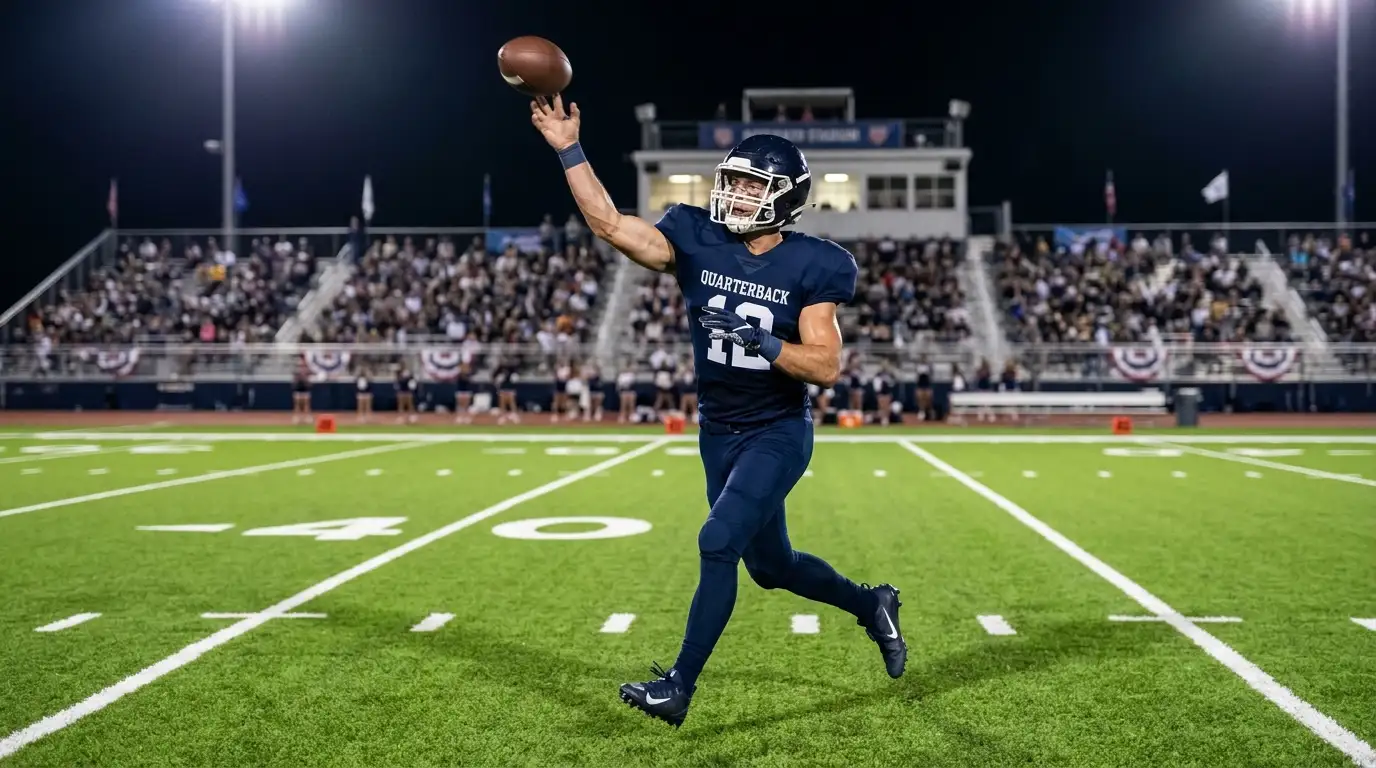
The line is a forecast, not a fact
The first NFL passing yards prop I ever lost talked me into it with a number I trusted too much. A book had hung a quarterback total at 274.5, I nodded along, and I never asked the only question that matters: what does that line actually predict? An NFL passing yards prop is a bet on whether a single quarterback throws for more or fewer yards than a posted figure, settled on real passing yards alone. It sounds simple, and that simplicity is exactly where the casual money gets caught.
What you are really betting on is volume multiplied by efficiency, filtered through a game that has not happened yet. The book has built that 274.5 from pace, opponent, and a dozen other inputs, then added a margin so the price favours the house. Your job is not to guess whether a passer is good. It is to decide whether the projection baked into the line is too high or too low, and whether the price pays you enough to back that read.
Player props now sit at the heart of how Britain bets on the NFL. As one prop-strategy desk put it, player props have become the fastest-growing bet type in sports betting, and for good reason. The survey work backs that up: while spreads still attract 61 per cent of NFL bettors and totals around 47 per cent, props have gone from a curiosity to a core market and are no longer treated as a novelty. The quarterback yardage line is one of the busiest of the lot, which means you are competing against a market that has seen this bet a thousand times. That is the frame for everything that follows.
Pair passing yards with NFL receptions props for correlated passing game bets.
What the quarterback total actually measures
Picture two quarterbacks who both finish a Sunday with 270 passing yards. One threw 45 times in a frantic shootout; the other threw 28 times and averaged nearly ten yards a throw against a defence that kept gifting deep shots. Same number, completely different paths. The passing yards prop does not care how you got there, only where you land, and that gap between route and result is where most beginners trip.
The market is almost always an over/under. A book posts a figure, say 248.5 yards, and prices both sides. A standard two-way prop quoted at -110 each way carries an overround of roughly 4.8 per cent, meaning the implied probabilities of over and under add up to about 104.8 per cent rather than a clean 100. That extra slice is the margin you are paying, and on props it tends to run wider than on spreads or totals, often in the 6 to 10 per cent range. Knowing that margin exists changes how you read every quote.
One detail trips people constantly: what counts. Passing yards are net of nothing on the offensive side in the way people assume. Sacks subtract from team passing yardage in the box score but do not reduce a quarterback’s individual passing yards, because a sacked passer never completed a throw. Kneel-downs at the end of a half count as rushing plays, not passing, so they do not touch the prop either. If you are betting a quarterback total, you are betting completed-pass yardage and nothing else, and that is cleaner than the chaos of the play-by-play suggests.
What moves the line before kick-off
I once watched a passing total drop four and a half yards in an afternoon because a forecast picked up a gust. That is the kind of mover that matters, and it is worth knowing the hierarchy of what shifts a quarterback number. Pace sits near the top. A team that runs more offensive plays gives its passer more chances to accumulate, so an expected up-tempo game lifts the line and a grind-it-out matchup drags it down.
Game script is the next lever, and it is the one casual bettors underrate. A quarterback whose team is expected to trail will likely throw more in the second half as the running game gets abandoned, which is why the same passer can carry very different totals depending on the spread. The flip side bites just as hard: a heavy favourite that leads early often shelves the pass entirely in the fourth quarter, capping yardage that looked safe at half-time. I unpack that dynamic properly in how game script and pace reshape every prop, because it deserves more than a paragraph.
Then there is weather, and wind is the one to fear. A passing line that looks generous on a calm forecast can become a trap if a 20 mph crosswind rolls in, because deep balls die and offences lean run. Books adjust to forecasts, but not always quickly, and the lag is where sharp money lives. Opponent matters too, of course: a defence that funnels offences into the air through a soft secondary inflates a passer’s ceiling, while a unit that sits in two-high coverage caps the explosive plays that build big totals. None of these factors works alone. The line you see is the sum of all of them, and your edge comes from spotting one the book has weighted wrong.
Where the value actually hides
Value on a passing prop is never the headline number; it is the gap between your honest projection and the no-vig version of the book’s line. Strip the margin out first. If a book quotes the over at decimal 1.91 and the under at 1.91, neither side is offering you a fair coin flip, because that 4.8 per cent overround means the true break-even is closer to 52.4 per cent, not 50. Build your own yardage projection, convert it to a probability, and only bet when your probability clears that break-even with room to spare.
Here is a pattern that holds up in practice: player props, and especially the more exotic ones on secondary names, sit in a less efficient market because bookmakers have less historical data to lean on. Exotic props on lesser players are simply harder for books to price tightly, while star quarterbacks are the sharp exception. The market on a marquee passer is well-traded, so I rarely find soft numbers there. The edges live on the backups, the committee situations, and the spots where a forecast or an injury has not fully filtered into the price.
Line shopping turns a thin edge into a real one. The same quarterback total can sit at 261.5 with one book and 258.5 with another, and that three-yard swing is the difference between a push and a winner over a season. I never bet a passing prop at the first price I see, and if you want a worked method for chasing the best number across UK books, that is its own discipline worth learning. The order of operations is always the same: project, devig, then shop. Reverse it and you are just guessing in a nicer order.
Visit best nfl player prop bets for all NFL yardage markets.
The mistakes that quietly drain a bankroll
The most expensive habit I see is betting the name, not the number. A famous passer with a generous-looking line feels like free money, which is precisely why the book sets it where it is. Recreational money piles onto the over on big names, the price hardens, and you end up paying a premium for a household brand. The unglamorous unders on those same quarterbacks often carry the real value, because nobody wants to bet against a star.
The second trap is ignoring game context in favour of season averages. A quarterback averaging 270 a game means little if this week’s matchup is a 15-degree slog in a swirling wind against a defence built to take away the deep ball. Averages are a starting point, not a projection. The third is overbetting volatility: passing yardage swings hard week to week, and treating one prop like a lock leads to stakes that variance will punish. Size small, shop hard, and let the edges accumulate. That is the entire game.
Do passing yards include sacks and kneel-downs?
No on both counts. A quarterback’s individual passing yards count only completed-pass yardage, so a sack never reduces them because no throw was completed, and kneel-downs are scored as rushing plays rather than passes. Sacks do reduce a team’s net passing total in some box-score formats, but the player prop settles on the passer’s own passing yards.
Why does weather lower a passing yards line?
Wind is the main culprit. A strong crosswind kills deep accuracy and pushes offences toward the run, so books shave the projected total when a windy forecast appears. Rain and cold matter less but still nudge the number down. Books often adjust to forecasts with a lag, which is why a quick-moving weather change can leave a stale, beatable line on the board.
Is the over or under more popular on QB passing yards?
The over draws far more casual money, especially on well-known quarterbacks. People enjoy backing yards to pile up and instinctively bet on things happening rather than not happening. That tilt means books can shade popular overs slightly, which is exactly why disciplined bettors so often find their value sitting quietly on the under.
Written by the editors at Best nfl Player Prop Bets.