Responsible NFL Prop Betting in the UK: Tools, Limits and Support
 Available in US
The tools that keep betting a hobby
I have written a great deal about finding value, but none of it matters if betting stops being something you enjoy and starts being something that controls you. Responsible betting is the practice of staying in control of how much time and money you spend, using the tools and support available to keep wagering a hobby rather than a problem. For a UK prop bettor, those tools are unusually well developed, because the British market is one of the most actively regulated in the world, and knowing what is available is part of betting sensibly.
Props deserve a specific mention here because they can be especially absorbing. The fast settlement, the constant stream of markets, the live and granular options, all of it makes prop betting engaging in a way that can blur the line between entertainment and compulsion. That same engagement that makes props fun is what makes the responsible-betting tools worth setting up before you need them, rather than after. Putting limits in place when you are calm and in control is far easier than trying to claw back control once you are not.
This is not a lecture, and it is not about whether to bet. It is about the practical infrastructure that exists in the UK to help you bet within your means: the limits you can set, the self-exclusion options, the regulatory protections, and the free support services. These are ordinary features of a regulated market, designed to be used, and the bettor who knows them is simply a better-informed one. Let me walk through what is available and how it works.
The safer-betting tools you can use
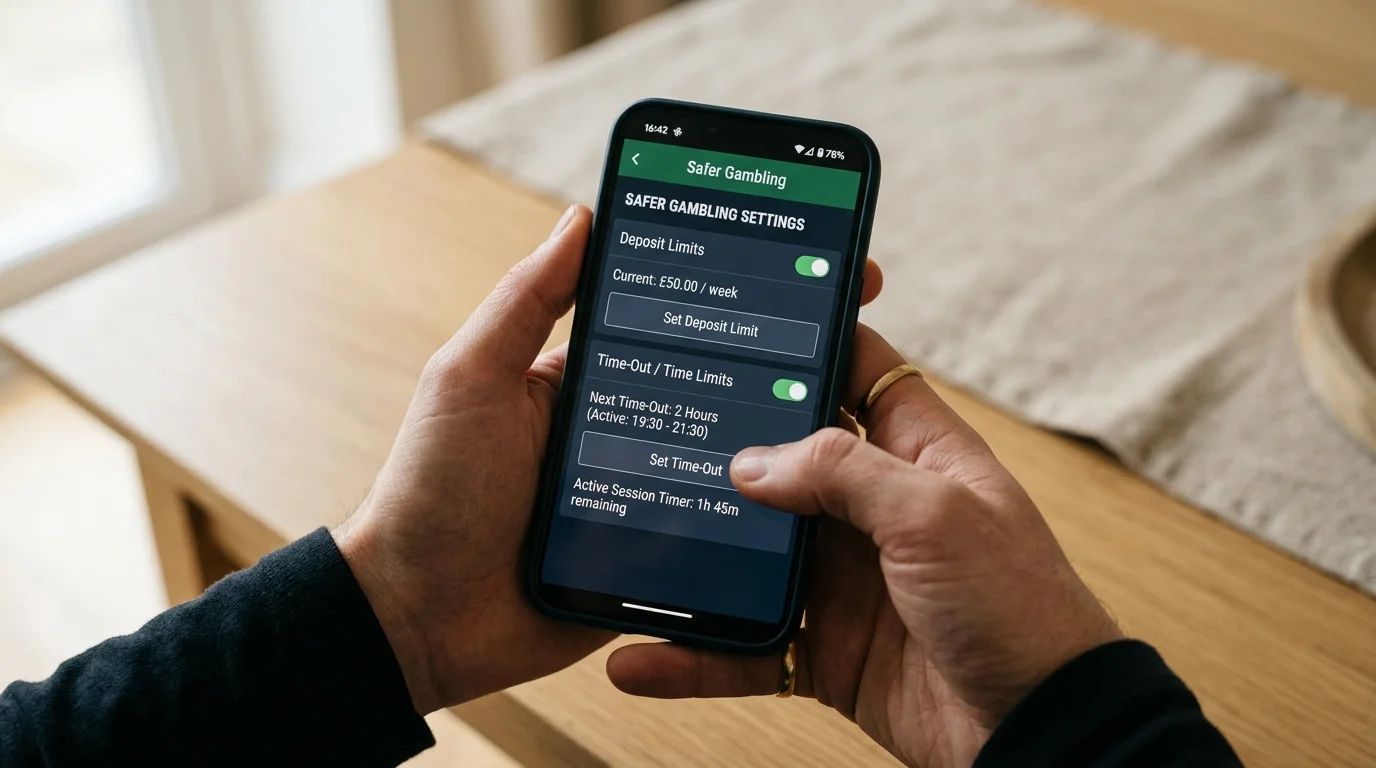
UK-licensed bookmakers are required to offer a suite of tools that put you in control of your own account, and the most useful are the limits. Deposit limits cap how much you can pay into your account over a chosen period, daily, weekly, or monthly, so you cannot spend beyond what you have decided in advance. Many books also offer stake or loss limits and time reminders that flag how long you have been betting. Setting these is a few taps in the account settings, and they work quietly in the background once in place.
The more significant tool is self-exclusion, which lets you block yourself from betting for a set period when you feel you need a break. At the individual-book level you can self-exclude from one operator. More powerfully, GAMSTOP is a free national scheme that lets you self-exclude from all UKGC-licensed online operators at once, with a single registration, for a period you choose. Rather than having to contact every book separately, GAMSTOP applies your exclusion across the licensed online market, which is a meaningful safeguard if you decide you need to step away entirely.
The point of these tools is that they let you make a calm decision now that holds even when you might later be tempted to overstep it. A deposit limit set on a quiet Tuesday protects you on a frustrating Sunday. Self-exclusion gives a firm boundary that does not rely on willpower in the moment. None of this requires admitting a problem; these are sensible controls that any bettor can use to keep the activity within the bounds they have chosen for themselves, and using them is a sign of a thoughtful approach rather than a worrying one.
The regulatory context behind the tools
These tools do not exist by accident; they are the product of an actively regulating market that has been tightening protections in recent years. A clear illustration is the introduction of stake limits on online slots: from April 2025 a maximum stake of 5 pounds per spin applied to all adults, with a tighter 2-pound limit for those aged 18 to 24 from later that spring. While that specific measure targets slots rather than sports betting, it signals a regulator willing to impose concrete limits to reduce harm, which is the same impulse behind the account-level tools available to bettors.
The evidence base behind this regulation is substantial, drawing on one of the largest gambling research efforts anywhere. The Gambling Commission’s major survey work, conducted with academic partners, gathers detailed data on how Britain gambles, and that research feeds directly into policy. One of the researchers central to that effort, Professor Heather Wardle of the University of Glasgow, expressed being delighted to extend the work with the Commission on the survey, reflecting how the regulatory framework is built on continuing study rather than guesswork. Participation data from that research also gives useful context: betting participation runs notably higher among men than women, at around 16 per cent versus 4 per cent over a recent four-week period, the kind of detail that helps regulators target protections sensibly.
For a bettor, the practical meaning of all this is reassurance. The UK market is not a free-for-all; it is overseen by a regulator that imposes real obligations on operators, backs its decisions with extensive research, and has shown it will introduce hard limits when it judges them necessary. That framework is why the safer-betting tools are standard and why the protections behind your account are more robust than in many less-regulated markets. Betting within that system means betting with a meaningful safety net underneath you.
Where to find support
If betting ever stops feeling like a hobby, free and confidential support is available, and reaching for it is a normal, sensible step rather than a last resort. BeGambleAware is the principal UK resource, offering free information, self-assessment tools, and access to support for anyone who wants to understand or change their gambling, whether for themselves or for someone they care about. It is designed to be approached at any stage, not only in crisis, so there is no threshold of severity you need to reach before it is appropriate to use it.
The support landscape extends beyond a single service. The National Gambling Helpline provides free, confidential advice over the phone and online for people in Great Britain, and a range of treatment and peer-support options exist for those who want more structured help. You do not need to have a diagnosed problem to make use of any of this; wanting to talk through your betting, or simply to get a clearer picture of your habits, is reason enough. The services are there for the full spectrum, from mild concern to serious difficulty.
The healthiest framing is that responsible betting and good betting are the same thing. Staying in control, setting limits, and knowing where support sits are not separate from being a sound bettor; they are part of it, because a bettor who has lost control has lost the discipline that any edge depends on. The same care that goes into sizing your stakes, which I cover in bankroll and unit size for prop betting, extends naturally into protecting your wellbeing. Set your limits, know the tools, keep the support details to hand, and betting stays what it should be: an enjoyable hobby you remain firmly in charge of.
What is GAMSTOP and how does self-exclusion work?
GAMSTOP is a free national scheme that lets you self-exclude from all UKGC-licensed online operators at once with a single registration, for a period you choose. Rather than contacting each book separately, you register once and the exclusion applies across the licensed online market. You can also self-exclude from an individual operator directly. Self-exclusion gives a firm boundary for stepping away from betting that does not rely on willpower in the moment.
Can I set deposit and stake limits with a UK bookmaker?
Yes. UK-licensed bookmakers are required to offer tools that put you in control of your account. Deposit limits cap how much you can pay in over a daily, weekly, or monthly period, and many books also offer stake or loss limits and time reminders. Setting them takes a few taps in the account settings, and they work automatically once in place. Putting limits in when you are calm protects you during moments you might later overstep.
Where can UK bettors get free gambling support?
BeGambleAware is the principal UK resource, offering free information, self-assessment tools, and access to support for anyone wanting to understand or change their gambling, for themselves or someone they care about. The National Gambling Helpline provides free, confidential advice by phone and online in Great Britain. You do not need a diagnosed problem to use any of it; wanting to talk through your betting or get a clearer picture of your habits is reason enough.
Prepared by the Best nfl Player Prop Bets editorial staff.