NFL Same Game Parlays and Bet Builders: A UK Guide to Correlation
 Available in US

The bet that pays like a jackpot and costs like one too
A friend texted me last season with a screenshot of a four-leg bet builder that had landed for nearly forty times his stake, captioned with about six exclamation marks. He wanted to know my secret. I told him the truth, which is that there is no secret, and that the same product which had just paid him handsomely is the most expensive way to bet on the NFL that the books have ever invented. Both things are true at once, and understanding why is the whole point of this article.
A same game parlay — known in the UK almost universally as a bet builder — is a single bet that combines several outcomes from one game into one slip, paying out only if every leg wins. Stack a quarterback’s passing yards, his favourite receiver’s reception total and an anytime touchdown scorer from the same match, and you have built a bet builder. The product has exploded inside a sport that already moves enormous money — Americans wagered around 166.94 billion dollars on sport in 2025, with roughly 30 billion of it flowing through the NFL — and the industry data is blunt about why the books push the builder so hard: parlays now contribute a wildly disproportionate share of operator revenue relative to the money staked on them.
What I want to do here is demystify the bet builder without either romanticising the payouts or sneering at the punters who enjoy them. We will cover what the product actually is, how the UK bet builder works in practice, why the legs are correlated and what that does to the price, where the heavy margin hides, how a payout is genuinely calculated, and the narrow circumstances in which building a bet actually makes analytical sense. This is the combination bet, examined honestly — not the single props that the rest of this site dissects elsewhere, and not the single-bet vig maths covered in the dedicated piece on that.
Add in-play legs using our NFL live in-play props guide.
What a same game parlay is
The cleanest way to understand a same game parlay is to start with what an ordinary parlay does, then shrink it into a single match. A traditional parlay — an accumulator, in older British parlance — links bets from different games, and you need every one to win. A same game parlay does exactly the same thing but with all the legs drawn from a single fixture.
The mechanics are unforgiving and worth stating without softening. Every leg must win. If you build a five-leg bet and four legs land while the fifth misses by a single yard, the entire bet loses and your stake is gone. There is no partial payout, no consolation for getting most of it right. That all-or-nothing structure is the source of both the dazzling potential return and the brutal strike rate, and it is the first thing any honest guide has to put front and centre. The longer you build, the bigger the potential payout and the smaller the probability that the whole thing survives.
What makes the same game version distinct from an old-fashioned accumulator across different matches is that the legs are not independent. In a multi-game accumulator, what happens in one match has no bearing on another. In a same game parlay, the legs are all events within one game, and those events influence one another — sometimes helping, sometimes hurting. That interdependence is called correlation, and it is the single concept that separates someone who builds bets thoughtfully from someone who simply throws names at a slip and hopes. We will come to correlation properly in a moment, because it is the heart of the matter, but hold onto the idea now: same game means connected, and connected changes everything about how the bet should be priced and built.
How the UK bet builder works
If you have only ever read American coverage, the phrase “same game parlay” might be all you know. Walk into the British market and you will mostly see a different name on the button: bet builder. They are, for practical purposes, the same product wearing local clothing, and knowing that saves a lot of confusion.
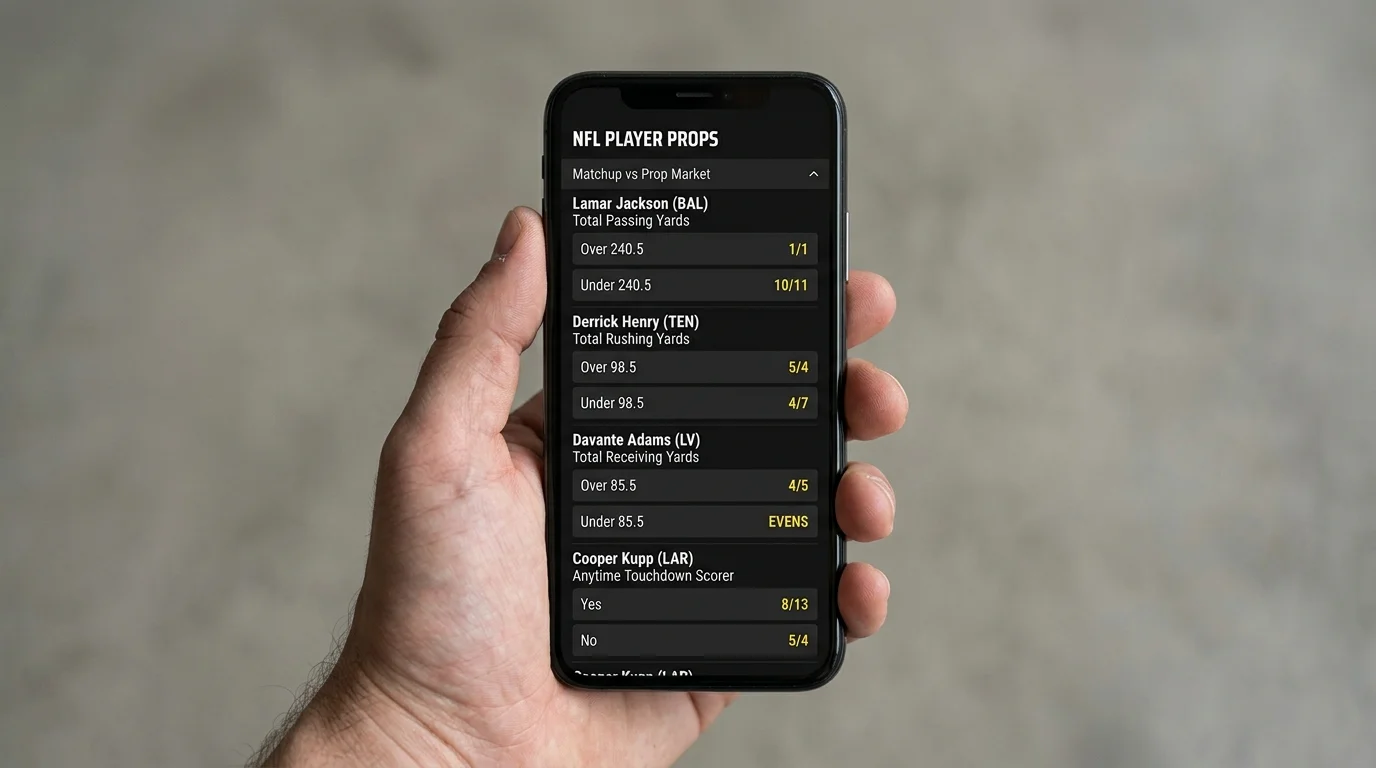
The bet builder is the term UK books overwhelmingly use, and it is built into the heart of the British betting app experience. You select a market within a single game — passing yards, anytime scorer, total receptions, a player to record an interception — and each selection drops into your builder. As you add legs, the combined price updates in front of you, climbing with every selection. When you are happy with the combination, you stake it as one bet. The interface is deliberately smooth and genuinely fun to use, which is part of why the product has become so central to how British punters engage with the NFL.
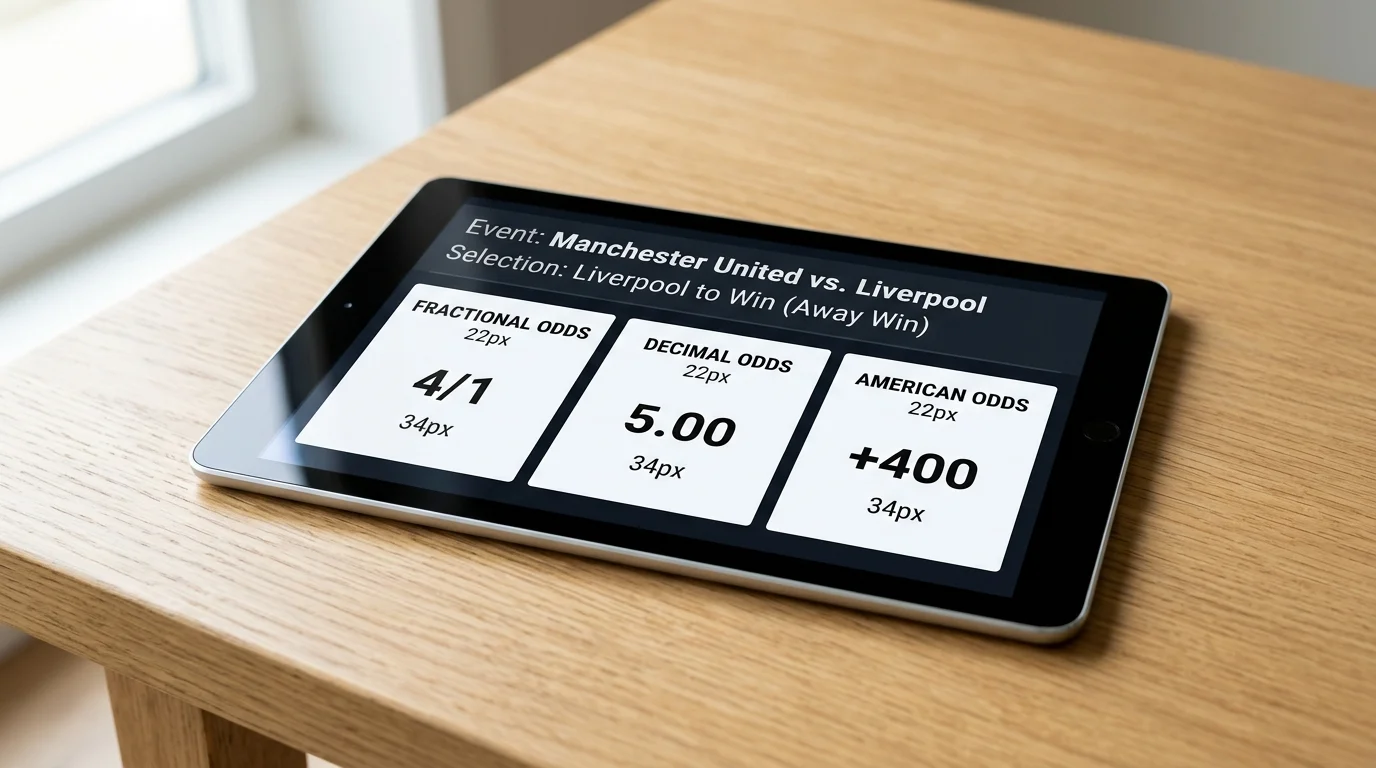
UK bet builders present their odds in the formats British bettors expect — fractions and decimals — rather than the American moneyline, but the underlying logic is identical to the same game parlay sold in the United States. The combined fractional or decimal price you see is the product of the individual legs, adjusted for correlation, which is where the pricing gets interesting and where the margin gets buried. One practical quirk you will meet: not every combination is allowed. Books block certain leg pairings, and they do it for a specific reason rooted in correlation, which is the next thing we need to unpack. For now, the takeaway is that the bet builder is simply the British face of the same game parlay, and everything that follows about correlation, margin and payouts applies whatever the button on your app happens to say.
Why the legs are correlated
Here is the concept that, once it clicks, changes how you look at every bet builder you ever construct. The legs of a same game parlay are not independent coin flips. They lean on each other, and the direction of that lean — helpful or harmful — determines whether your combination is sharper than it looks or quietly self-defeating. Let me make it mechanical, because correlation gets talked about as if it were mysterious, and it is not.
Take the simplest example. You back a quarterback to throw for over 300 yards, and in the same builder you back his number-one receiver to go over 90 receiving yards. Those two outcomes are positively correlated, because the most natural way for the quarterback to reach 300 yards is by throwing to that receiver, and the most natural way for the receiver to reach 90 yards is for the quarterback to be throwing well. When one leg wins, the other becomes more likely to win too. They rise and fall together. That is positive correlation, and it is the friendly kind — it makes the combined outcome more probable than the two legs treated as unrelated would suggest.
Now flip it. Suppose you back the same quarterback over 300 yards and also back the opposing team’s running back to rush for over 100 yards. Those outcomes pull against each other. A game in which one team is throwing for 300 yards is often a game in which they are ahead and the opponent is forced to abandon the run to catch up — which suppresses the rival back’s rushing. When one leg becomes more likely, the other becomes less. That is negative correlation, and combining negatively correlated legs is how punters unknowingly build bets that are even less likely to land than the raw prices suggest. The legs are quietly sabotaging each other.
This is exactly why books block certain combinations. If a punter could freely stack strongly positively correlated legs — quarterback passing yards, his top receiver’s yards, that receiver to score, all in one builder — the true combined probability would be far higher than the price, and the bettor would have a structural edge. The book closes that door by either forbidding the combination outright or by re-pricing the correlated legs to claw the advantage back. The growth of this product has been staggering, with bettors continuing to pour money into same game parlays that have, in the words of one sportsbook insider, simply continued to skyrocket. Books do not promote a product that hard unless the maths is firmly in their favour, and correlation pricing is a large part of how they keep it there.
So the practical lesson on correlation is twofold. First, seek the positive: if you are going to build, build legs that genuinely help each other through a coherent game story, because a believable narrative — this quarterback has a big day throwing to this receiver — is correlation working for you. Second, respect the re-pricing: the book knows about the positive correlation too, and it adjusts the combined price to absorb most of the advantage. You are rarely getting the full benefit of the correlation you have spotted, because the trading desk spotted it first. Correlation is the key to building intelligently, but it is not a loophole — it is a feature the books have already priced.
The parlay hold and where the margin hides
I called the bet builder the most expensive way to bet on the NFL, and this is the section where I prove it. The margin on a parlay is not the sum of the margins on its legs — it compounds, and it compounds in a way that is invisible on the slip and devastating over time.
The industry numbers are stark enough to stop you mid-build. In some US states the hold on parlays has climbed to around 30%, and across the market parlays generate roughly a quarter of all the money staked yet more than half of operator revenue. Read those two figures together and the whole strategy of the modern sportsbook reveals itself. A quarter of the turnover produces over half the profit, because the effective margin on parlays is several times what the book makes on a straight single. The bet builder is not a fun add-on to the core business — it is the core business, the single most profitable product on the menu, and the books build their apps around funnelling you toward it for exactly that reason.
Why does the margin compound so brutally? Because each leg carries its own vig, and stacking legs multiplies those margins together rather than adding them. A single prop might carry a margin of, say, 6%. Put four such legs in a builder and you are not paying 6% — you are paying something far closer to the compounded effect of four separate margins layered on top of one another, because the book takes its cut on every leg and the cuts stack multiplicatively. Add the correlation adjustments on top, and a four or five-leg bet builder can carry an effective margin that dwarfs anything you would tolerate on a single bet if you could see it written down. The cruelty of it is that you cannot see it written down. The combined price hides the compounding completely.
This is the honest centre of the whole article, and I will not dress it up. The bet builder is a high-margin product, deliberately designed and aggressively promoted because it is the most profitable thing the book sells. That does not make it a scam — every leg is fairly settled and the occasional big winner is real — but it does mean you should approach it knowing you are buying entertainment at a premium price, not pursuing value. The forty-times-stake screenshot my friend sent me was a genuine win. It was also a single bright result drawn from a product whose maths guarantees the book wins handsomely across all the slips it does not pay out.
How a payout is actually calculated
People assume bet builder pricing is some black art. It is not. It is multiplication, with a correlation adjustment bolted on, and once you can see the arithmetic you can see exactly how much the combining costs you. Let me walk it through with clean, brand-free numbers so the mechanism is unmistakable.
Start with the simple case of independent legs, the way an old-fashioned accumulator across different games would price. Decimal odds combine by multiplication. Say you have three legs each priced at 1.91 — the standard prop price, implying about 52.4% each. The combined decimal odds are 1.91 × 1.91 × 1.91 = 6.97. A £10 stake returns £69.70 if all three land. So far this is just multiplication, and the implied probability of the whole bet is 1 ÷ 6.97 = about 14.3%, which is roughly 0.524 × 0.524 × 0.524 as you would expect from three independent events.
Now introduce correlation, which is what makes a same game parlay different from that simple accumulator. If the three legs are positively correlated — they tend to win together — then the true probability of all three landing is higher than the 14.3% the naive multiplication implies. A fair price would therefore be shorter than 6.97, because the outcome is more likely than independence suggests. The book knows this, so it does not offer you the naive 6.97. It offers a shorter price that reflects the correlation, and it shades that price to keep a healthy margin for itself. You end up being offered, say, 5.50 on a combination whose naive price was 6.97 — the book has pocketed the correlation benefit and a margin besides. Conversely, if you somehow combined negatively correlated legs, the true probability would be lower than independence implies, and the bet is worse than the multiplication suggests even before margin.
The single most useful habit I can give you here is to multiply the legs yourself before you build. Take the individual decimal prices, multiply them, and compare that naive figure to the combined price the book is actually offering. If the book’s price is dramatically shorter than your multiplication, you are looking at heavy correlation pricing and a fat margin. If you want to understand how this kind of price-checking fits into protecting your bankroll over a full season — because builders, with their low strike rate, demand particular care with stake sizing — the guide to bankroll and staking for props takes that practical thread further. The arithmetic of the payout is not hidden from you. It is just that almost nobody bothers to do it, which is precisely the behaviour the product is built to encourage.
When building a bet genuinely makes sense
After all that, you might expect me to tell you never to touch a bet builder. I am not going to, because that would be both unrealistic and slightly dishonest. There are narrow, defensible reasons to build a bet, and the key is being clear-eyed about which reason you are acting on.
The legitimate analytical case rests entirely on positive correlation that the book has under-priced. If you genuinely believe a game will unfold in a particular way — a high-scoring shootout in which one quarterback throws for a huge total to one specific receiver who also finds the end zone — then a builder that captures that coherent story can, occasionally, offer real value, because the correlated legs reinforce one another and the book has not fully adjusted the price. These opportunities are rare, they require a strong directional read on how the whole game flows, and the same game parlay handle has skyrocketed precisely because so few of the punters chasing it are building on that basis. When the story is real and the correlation is genuine, a tight two or three-leg builder is the defensible play. Anything beyond a handful of legs is almost always the margin eating you alive.
The other honest reason is entertainment, and I refuse to be sniffy about it. A bet builder turns a single game into sixty minutes of edge-of-the-seat investment, and for a fan watching a London game with friends, that experience has genuine value that has nothing to do with expected return. If you build for fun, build for fun — but do it with eyes open, with a small stake you have decided in advance to treat as the cost of the entertainment, and never with money you are relying on getting back. The danger is not building for fun; it is building for fun while telling yourself you are building for value. Those are different activities, and conflating them is how the recreational punter slides into chasing the dragon of that one big screenshot.
My own rule, after nine years, is simple and a little boring. I build rarely. When I do, it is a short, positively correlated combination drawn from a clear view of how the game will flow, staked small, and accepted as a long shot at a premium price. I never stack negatively correlated legs to manufacture a bigger number, I never add a leg just to push the payout higher, and I never treat a builder as a route to consistent profit, because the maths forbids it. Treated that way — sparingly, intelligently, and with the margin firmly in mind — the bet builder is a legitimate, occasionally rewarding part of the toolkit. Treated as a get-rich-quick button, it is the most efficient way the books have ever found to separate an optimistic punter from a steady stream of stakes.
See also: best nfl player prop bets for the latest NFL parlay advice.
Building with your eyes open
My friend with the forty-times-stake screenshot still bets builders, and I still tell him the same thing I told him that day: enjoy it, but never confuse the result with the maths behind it. That single win was real, and it was also a draw from a product engineered so that the book profits handsomely across every slip it does not pay. Both truths sit side by side, and holding both at once is what it means to build with your eyes open.
The bet builder is the most profitable product the modern sportsbook sells, and the data leaves no room for sentiment about it — a quarter of the staked money producing more than half the revenue is not an accident, it is the design. The margin compounds across the legs, the correlation pricing claws back the advantage you think you have spotted, and the combined price hides every penny of it. Understanding that does not mean you can never build. It means you build knowing precisely what you are buying.
So if you take a single principle from all of this, make it this one: multiply the legs yourself, look for genuine positive correlation that tells a coherent game story, keep the builds short, stake small, and decide before you ever tap “place bet” whether you are chasing value or buying entertainment. If it is entertainment, name it as such and budget for it like the day out it is. If it is value, prove it with the arithmetic before you commit a penny. The bet builder will always dangle the jackpot screenshot in front of you. The discipline is in remembering what the jackpot actually costs.
What is the difference between a same game parlay and a bet builder?
They are essentially the same product under different names. Same game parlay is the term used widely in the United States, while bet builder is the term UK bookmakers overwhelmingly use. Both combine several outcomes from a single game into one bet that pays out only if every leg wins, and both price the legs with correlation in mind. A British punter will almost always see the bet builder label, but the underlying mechanics are identical.
Why do some prop combinations get blocked in a bet builder?
Books block combinations that are too strongly positively correlated, because allowing them would hand the bettor a structural edge. If two legs naturally win together — a quarterback’s passing yards and his top receiver’s yards, for instance — the true combined probability is much higher than independent pricing implies. Rather than let punters exploit that, books either forbid the pairing or re-price the legs to absorb the advantage.
How is a same game parlay priced when the legs are correlated?
The book starts from the multiplication of the individual leg prices, then adjusts for correlation. Positively correlated legs are more likely to win together than independence suggests, so the fair combined price is shorter than the naive multiplication, and the book offers a shortened price while keeping a margin. A useful check is to multiply the individual decimal odds yourself and compare that figure to the combined price you are offered.
Are same game parlays worse value than single props?
Generally yes, because the margin compounds across the legs rather than simply adding. In some markets the hold on parlays has reached around 30%, and parlays produce roughly a quarter of staked money yet more than half of operator revenue. The combined price hides this compounding completely. A bet builder can occasionally offer value when it captures genuine, under-priced positive correlation, but as a default it is the most expensive product on the menu.
Published by the Best nfl Player Prop Bets team.