Anytime Touchdown Scorer Props: How to Bet the NFL’s Favourite Market
 Available in US
Table of Contents
- The market that hooks every new NFL bettor, and why they nearly all bet it wrong
- What an anytime touchdown scorer bet really is
- Why it is the most popular prop on the board
- The red zone is where touchdowns are decided
- Reading the odds without falling for the big number
- Where the value actually hides
- The mistakes that quietly cost you
- Betting the role, not the name

The market that hooks every new NFL bettor, and why they nearly all bet it wrong
The first NFL bet I ever felt clever about was an anytime touchdown scorer. I picked the most famous name on the team sheet, watched him get bottled up all afternoon while a third-string back vultured the only score from the one-yard line, and lost. That afternoon taught me more than any winning bet ever has, because it forced me to ask the only question that matters in this market: who actually scores, and why.
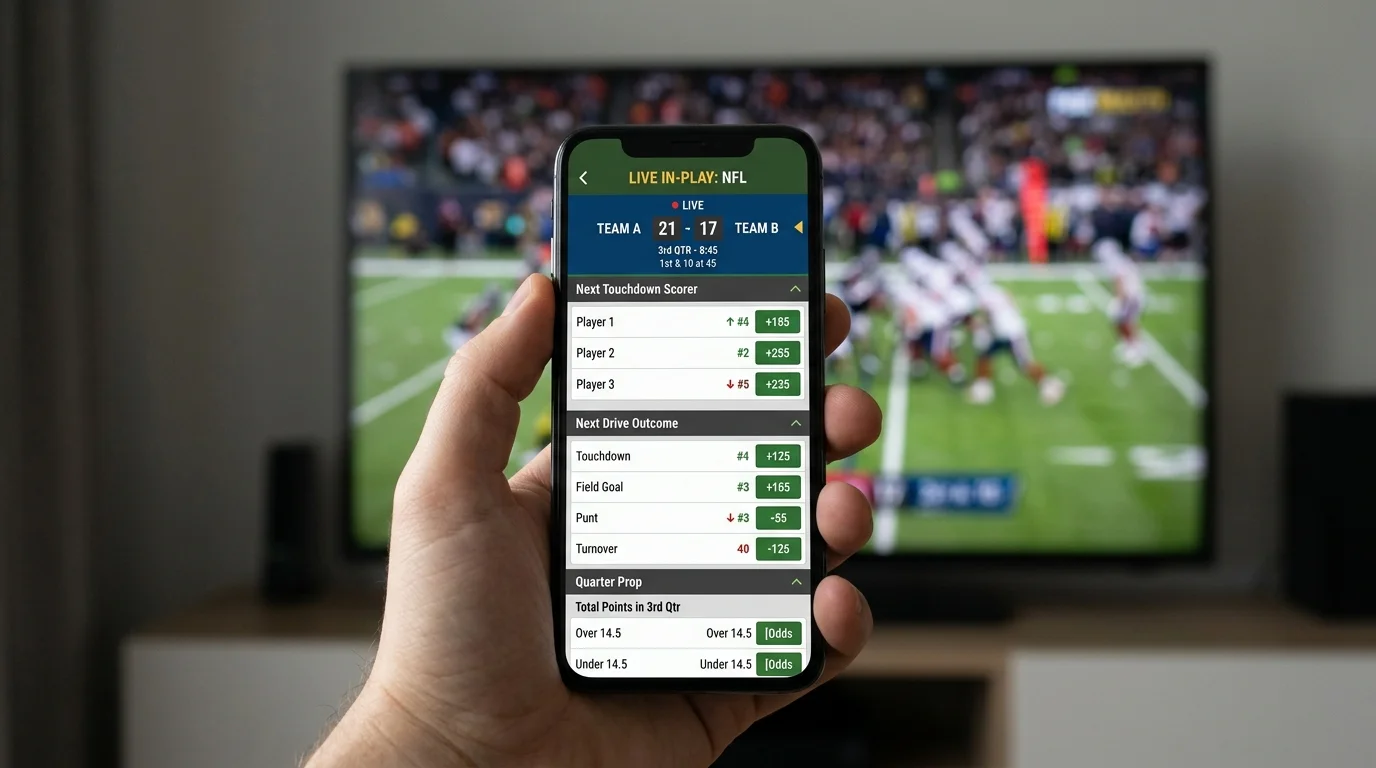
Anytime touchdown scorer is the bet that a specific player will reach the end zone at any point in the game. It is the most-backed player prop on the board by a distance — on one major book it ranks as the single most wagered player prop by turnover, with receiving yards and first touchdown scorer rounding out the top three. This is not a market for specialists; it is the market that everyone bets, which makes it both the most popular and, frankly, the most carelessly played.
What I want to do here is take the most accessible prop in the sport and show you how to think about it like an analyst rather than a fan. We will pull apart how the market works, why it draws so much money, how scoring actually distributes across the field, how to read the odds without getting seduced by a big number, and where the genuine value tends to hide. This is one specific market, deeply — not a tour of every prop, and not the longer-odds first touchdown scorer, which is its own beast entirely.
Narrow your pick with our NFL first touchdown scorer prop guide.
What an anytime touchdown scorer bet really is
Strip away the jargon and this is the simplest bet in football: will this player score a touchdown today, yes or no. It does not matter when, it does not matter how, and it does not matter whether they score one or four — a single touchdown settles the bet as a winner. That simplicity is exactly why it is the gateway prop for almost everyone who comes to NFL betting.
A touchdown counts whether it is a rushing score, a receiving score, or even a defensive or special-teams return for the players where that applies, though the books price the return possibilities into the longest odds. The bet is binary and it is forgiving in one specific sense: your player has the entire sixty minutes to find the end zone once. Compare that to first touchdown scorer, where your player must be the very first to cross, and you can already feel why anytime carries shorter odds — there are far more paths to winning it.
Its popularity is not an accident, and the scale of the surrounding market explains the appetite. American bettors wagered around 166.94 billion dollars on sport in 2025, up nearly 23% on the year, with roughly 30 billion of that flowing through the NFL alone. When that much money is moving and props have become the growth engine of the whole sector, the single most intuitive prop on the board — will my guy score — naturally collects an enormous share of the action. The anytime touchdown market is where casual enthusiasm and serious volume meet, and that combination shapes everything about how it is priced.
The thing to hold onto from the start is that “will he score” feels like a question about a player, but it is really a question about a role. The end zone is reached by whoever the offence funnels the ball to when it gets close, and that is a matter of scheme and personnel far more than star wattage. My famous-name disaster happened because I bet the player and ignored the role. Get that distinction right and you are already ahead of most of the money in this market.
Why it is the most popular prop on the board
Walk into any pub during a London game and listen to the bets people are shouting about. Nobody is debating no-vig fair lines on passing yards. They are backing a name to score, because it is the bet that turns a whole game into a personal stake on one player you can actually watch. That emotional pull is the engine of this market’s popularity.
The data confirms what the pub tells you. Anytime touchdown scorer is the most wagered player prop by turnover on a major operator, sitting at the very top of a category that has shed its novelty status entirely. Player props are no longer the curiosity they once were — among NFL bettors, the established markets still lead, with the spread favoured by 61%, the moneyline by 52% and totals by 47%, but props have become the genuine growth driver underneath them rather than a sideshow. And within props, nothing pulls like the touchdown market.
There are three honest reasons it dominates, and it is worth being clear-eyed about all of them. First, it is comprehensible — no maths, no line to clear, just a player and a yes. Second, it is emotionally sticky, because backing someone to score gives you a reason to care about every red-zone snap for sixty minutes. Third, and this is the part the books love, it lends itself to the longshot dream: a 6/1 or 10/1 scorer feels like a lottery ticket with a watchable draw. The combination of accessibility and the lure of a big number is irresistible to casual money, which is precisely why the books promote it so heavily and price it with the confidence that comes from huge volume.
None of that popularity is a reason to avoid the market. But it is a reason to respect what you are betting into. A market this heavily played by casual money is well-trodden ground, and the obvious names carry obvious prices. The value, when it exists, lives away from the crowd — and to find it you have to understand the part of the game the crowd never thinks about, which is who the offence actually trusts near the goal line.
The red zone is where touchdowns are decided
If you remember one thing from this entire article, make it this: touchdowns are not scored evenly across the field, they are manufactured in the red zone, and the red zone has a cast of characters that has almost nothing to do with who racks up the prettiest highlight-reel yards. I spent my first season betting touchdowns as if every yard the ball travelled were equally likely to end in a score. It does not work like that at all.
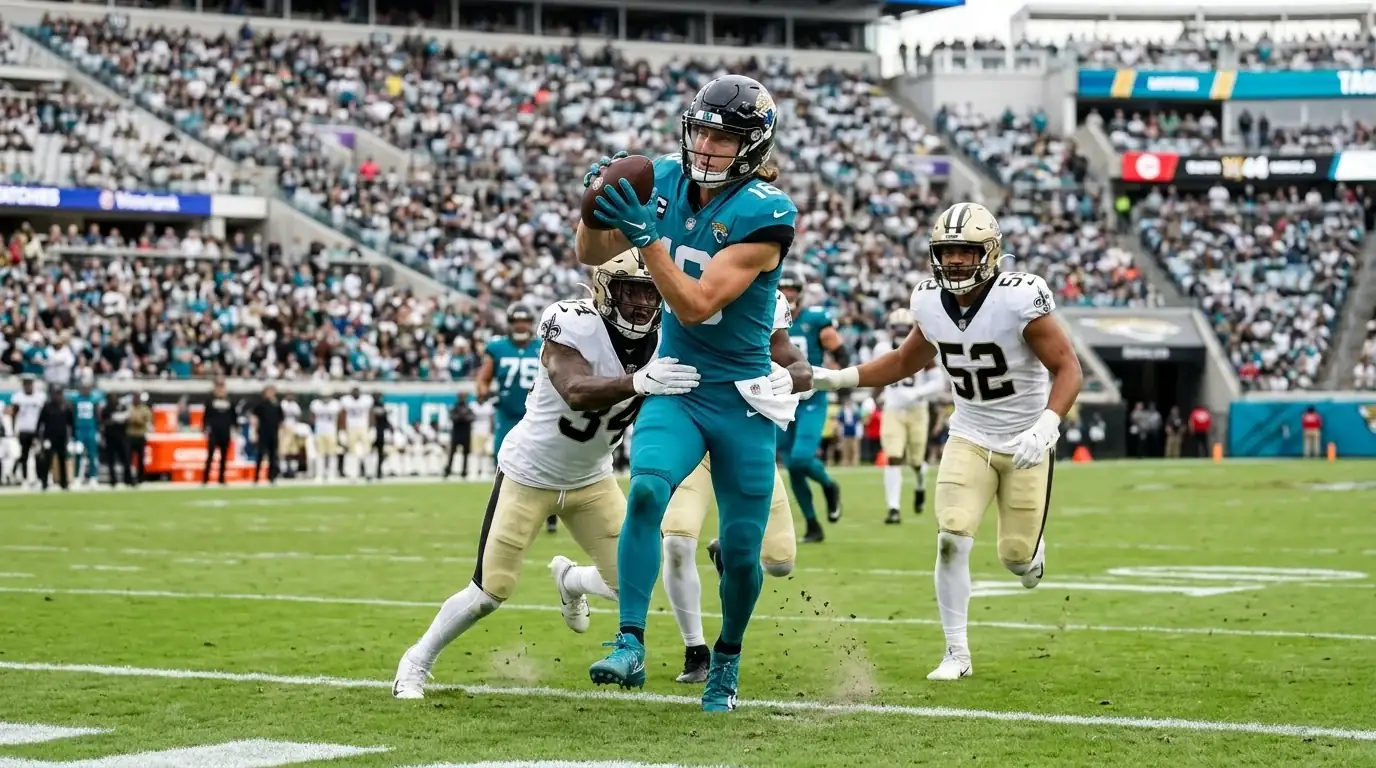
The red zone — the area inside the opponent’s twenty-yard line — is where offences turn territory into points, and the way a team operates there is heavily role-dependent. Goal-line carries tend to funnel to a specific back, often not the same player who handles most of the early-down rushing. Red-zone targets concentrate on big-bodied receivers and tight ends who can win contested catches in tight space. Quarterbacks who like to keep the ball on designed runs near the line become sneaky-strong touchdown threats that the casual market routinely underrates. Knowing which player wears which hat for a given offence is the entire game.
Let me make the roles concrete, because abstractions do not win bets. The classic mismatch the market misprices is the goal-line specialist — a back who barely features in the box score for total yards but who gets handed the ball on nearly every snap inside the five. His total yardage looks unimpressive, so casual money ignores him, yet his touchdown probability is among the highest on the field because he occupies the single most valuable role in the offence. Meanwhile the flashy receiver who piles up yards between the twenties may rarely be the target when the field shrinks, because his game is built on space that the red zone removes. The market often prices these two players on reputation and total production. The analyst prices them on role.
This is also where target share and snap count stop being statistics and start being predictions. A player who commands a large share of his team’s targets, and especially a large share of the targets inside the twenty, is a player whose touchdown probability the raw odds frequently understate. The relationship between usage near the goal line and scoring is direct and powerful, and it is the most reliable signal I know for this market. If you want to go properly deep on how usage metrics translate into scoring opportunity, the breakdown of red zone usage and target share is where that thread runs to its end. For our purposes here, the headline is simple: find the player the offence trusts when it gets close, not the player whose name you know.
Game context layers on top of role. A team that the model expects to score a lot — a heavy favourite with a high implied team total — distributes more touchdown opportunities to go around, lifting the scoring odds of everyone in its primary roles. A team expected to struggle offers fewer trips to the end zone to share out. So the question is never just “is this a good red-zone player”, it is “is this a good red-zone player on an offence likely to be in the red zone often today”. Role tells you who scores when the chance comes; game context tells you how many chances there will be.
Reading the odds without falling for the big number
The longshot is the most seductive trap in this market, and I have fallen into it more times than I would like to admit. A 10/1 scorer flashes up and the lottery-ticket part of your brain lights up. Before you back it, do the one piece of arithmetic that the big number is designed to stop you doing.
Convert the price to a probability. A favourite scorer at, say, 4/6 implies a probability of 6 ÷ (4 + 6) = 60%, before margin. An even-money scorer at evens implies 50%. A 3/1 scorer implies 1 ÷ 4 = 25%. A 10/1 longshot implies 1 ÷ 11 = about 9%. Lay those out and the seduction starts to fade, because now you can ask the only sensible question: do I genuinely believe this player scores more often than the price implies? The 10/1 shot is not “free money” — it is the book telling you it expects this player to score roughly one game in eleven, and your job is to decide whether you know something that makes that too long or too short.
Here is where the cost of the market bites, and where I gently puncture the longshot euphoria. Player props carry a fat margin to begin with, typically 6% to 10% and often more, and that margin is not spread evenly. It is loaded most heavily onto the longshots, because that is where the casual lottery money piles in and where the book’s own uncertainty is greatest. So the 10/1 scorer you fancy may carry an even larger effective margin than the 4/6 favourite — meaning the price is worse value than the headline number suggests, not better. The big number feels generous precisely because it has been built to feel generous. The arithmetic tells the truer story.
That does not mean favourites are the answer either. Short-priced scorers carry their own problem: at 4/6 you are risking a lot to win a little on an outcome that, while likely, is far from certain in a sport as chaotic as football. One goal-line stand, one fumble, one game script that turns pass-heavy in the second half, and your near-certain scorer is watching from the sideline as someone else punches it in. The favourite is not safe; it is merely shorter. Both ends of the price spectrum demand the same discipline: convert to probability, judge it against your own honest read of the player’s role and the game context, and bet only the gap. The number on the slip is the book’s opinion. Your edge is whatever you genuinely know that the book’s opinion has missed.
Where the value actually hides
After all the warnings, here is the encouraging part, and it is the reason I still love this market after nine years: the touchdown prop is one of the softer corners of NFL betting, and the value is findable if you look where the crowd does not. The trick is to invert your instinct. The crowd bets the stars; the edge sits with the players the crowd overlooks.
The structural reason for this is worth stating plainly, and it is put well: for player props, and especially the exotic props on secondary players, the market is simply less efficient, because the books have less historical data to price against. A superstar’s touchdown odds are scrutinised, hammered with money and sharpened to a fine point. A secondary back who has just inherited the goal-line role through an injury, or a tight end whose red-zone target share has quietly spiked over the last month, lives in the part of the market the books have the least data on and the casual money has the least interest in. That neglected corner is where mispriced odds survive longest, because nobody is betting them hard enough to correct the price.
So my practical hunting method is this. Start from role, not reputation. Identify the player who handles the goal-line carries or commands the red-zone targets, regardless of how famous he is. Layer in game context — is his offence likely to be in scoring range often today, given the spread and the implied team total. Convert his price to a probability and compare it honestly against your read of how often that role produces a score in that context. Then, crucially, check that price across more than one book, because the soft markets I am describing are exactly the ones where books disagree most, and a scorer priced 5/2 at one shop and 7/2 at another is a free upgrade for doing nothing but looking.
The bets I have won most consistently in this market share a profile: an unglamorous player in a high-value role on an offence expected to score, priced as though the book is still thinking about last season rather than this month’s usage. They are rarely exciting on the slip. A goal-line back at 6/4 does not set the pulse racing the way a 10/1 superstar longshot does. But the unsexy bet is where the maths lives, and the maths is the only thing that pays over a season. The most popular prop in the sport rewards the least popular way of thinking about it, which is precisely why it stays beatable.
The mistakes that quietly cost you
Every season I watch the same errors drain otherwise sensible bettors, and they are nearly all variations on a single theme: betting the name instead of the situation. Let me name the ones that cost the most, because avoiding them is most of the battle in this market.
The first and biggest is chasing reputation. The star receiver who racks up 1,200 yards a season is not necessarily a strong touchdown bet, because his production comes between the twenties and the red zone is somebody else’s office. Total yardage and touchdown probability are different questions, and conflating them is the error that cost me that very first bet. The second mistake is ignoring game script — backing a scorer on a team that is likely to be chasing the game and abandoning the run, or trailing so badly that garbage-time scores go to backups. The third is the longshot habit: stacking multiple big-priced scorers because the potential payout looks thrilling, while quietly betting into the fattest margins on the board.
The fourth, and the one that separates disciplined bettors from the rest, is failing to shop the price. The touchdown market is soft and the books disagree, so taking the first price you see on a scorer is leaving value on the table every single time. And the fifth is the most human of all: letting the watchability of the bet override the maths of it. An anytime scorer makes the game more fun, and there is nothing wrong with that, but fun and value are not the same thing, and the moment you start backing scorers because you want a rooting interest rather than because the price beats your estimate, you have stopped betting and started spending. Keep the two separate, bet the role over the name, and this most popular of markets will treat you far better than it treats the crowd.
Visit best nfl player prop bets for more NFL scoring markets.
Betting the role, not the name
Everything in this article comes back to the lesson my very first touchdown bet taught me on a Sunday afternoon years ago: the famous name lost, the goal-line specialist scored, and the difference between them was role, not reputation. The anytime touchdown scorer is the most accessible prop in the sport precisely because it feels like a question about a player. It is really a question about a job — who carries the ball at the one-yard line, who the offence looks for when the field shrinks, whose usage near the goal line the raw odds have not caught up with.
Get into the habit of asking that question and the whole market reorganises itself in front of you. You stop scanning the slip for the biggest name and start looking for the player the offence trusts when it matters, on a team likely to be in scoring range, at a price your estimate of his role can clear. You convert the longshot’s seductive number into the modest probability it really represents, and you check it across more than one book because the soft markets are the ones where books disagree most. None of this is glamorous. The bets that win in this market are quiet ones.
That, in the end, is the gentle paradox of the NFL’s favourite prop. The market everyone bets rewards the way of thinking almost nobody applies to it. The crowd backs stars on reputation into the fattest margins on the board; the analyst backs roles on usage into the soft corners the crowd ignores. Bet the role, respect the price, keep the fun and the value in separate pockets, and the touchdown market stays exactly what it should be — the most enjoyable place to apply a little discipline that the sport has to offer.
What’s the difference between anytime and first touchdown scorer?
Anytime touchdown scorer wins if your player scores at any point in the game, while first touchdown scorer requires them to score the very first touchdown of the match. Because there are far more ways to win an anytime bet, it carries much shorter odds. First touchdown scorer is a separate, longer-priced market with its own logic, and the two should never be treated as interchangeable.
Does an anytime TD bet win if the player scores a 2-point conversion?
No. A two-point conversion is not a touchdown, so it does not settle an anytime touchdown scorer bet as a winner. The bet requires the player to actually cross the goal line for six points, whether rushing or receiving. Always read the specific rules at your book, but as a rule a conversion does not count toward the anytime touchdown market.
Which positions score the most NFL touchdowns?
Running backs and wide receivers score the most, but the crucial detail is role rather than position. Goal-line backs and big-bodied red-zone receivers and tight ends score disproportionately because they occupy the highest-value scoring roles, even when their total yardage is modest. Quarterbacks who run designed plays near the line are also underrated scorers. Identify the player the offence trusts inside the twenty, not simply the most productive name.
Are favourites or longshots better value for anytime TD?
Neither is automatically better value. Favourites are likely to score but offer little reward for the risk, while longshots carry the fattest margins on the board because casual lottery money piles into them. The honest answer is that value depends on the gap between the price and your own estimate of how often that player’s role produces a score. Convert every price to a probability and bet only where you genuinely disagree with the book.
Prepared by the Best nfl Player Prop Bets editorial staff.