Alternate Lines on NFL Props: Trading Probability for Price
 Available in US
The same bet, dialled up or down
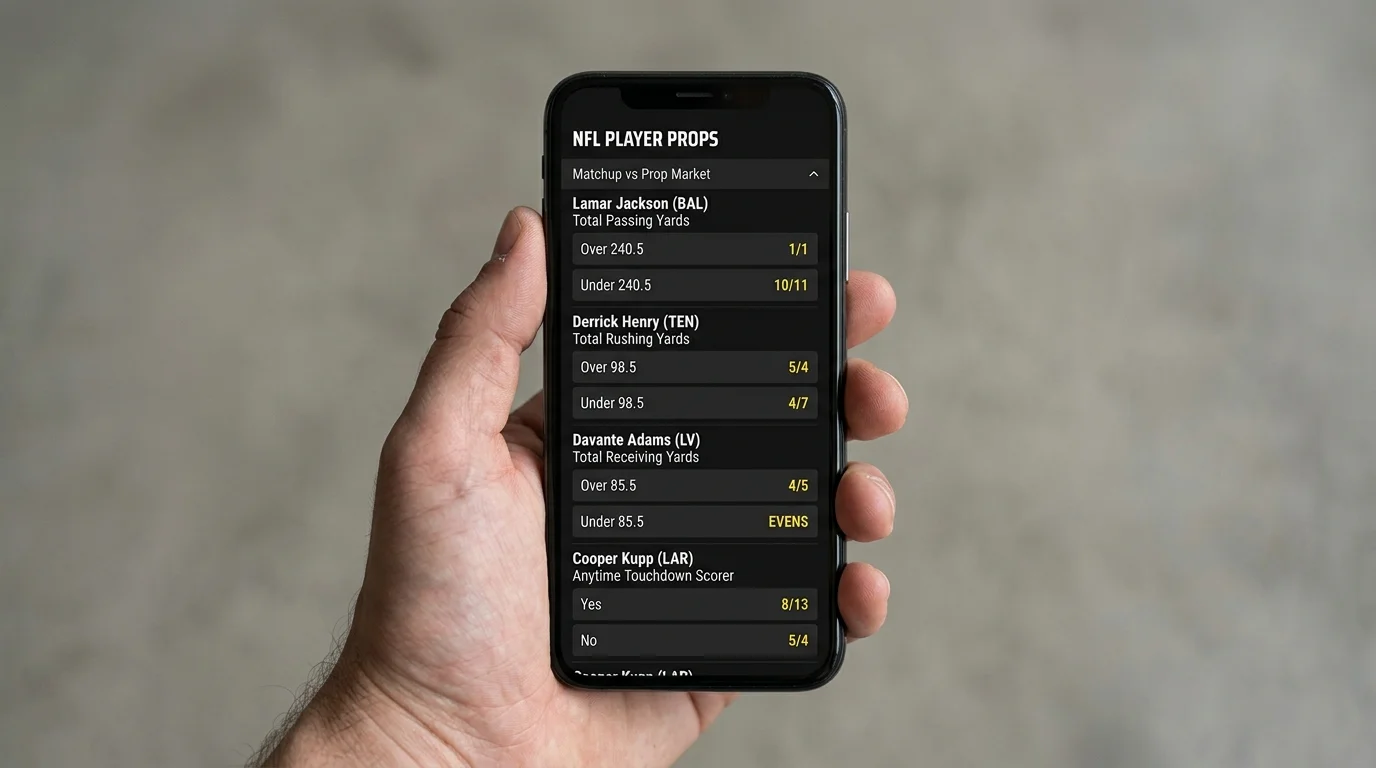
The first time I saw an alternate line menu I thought the book had made a mistake offering so many prices on one player. It had not; it was offering me a dial. An alternate line, or alt line, is a version of a prop set at a different threshold than the standard one, with the price adjusted to match. Where a receiver’s main line might be 64.5 yards, the alt menu lets you take 49.5 yards at shorter odds or 79.5 yards at longer odds, all on the same player in the same game.
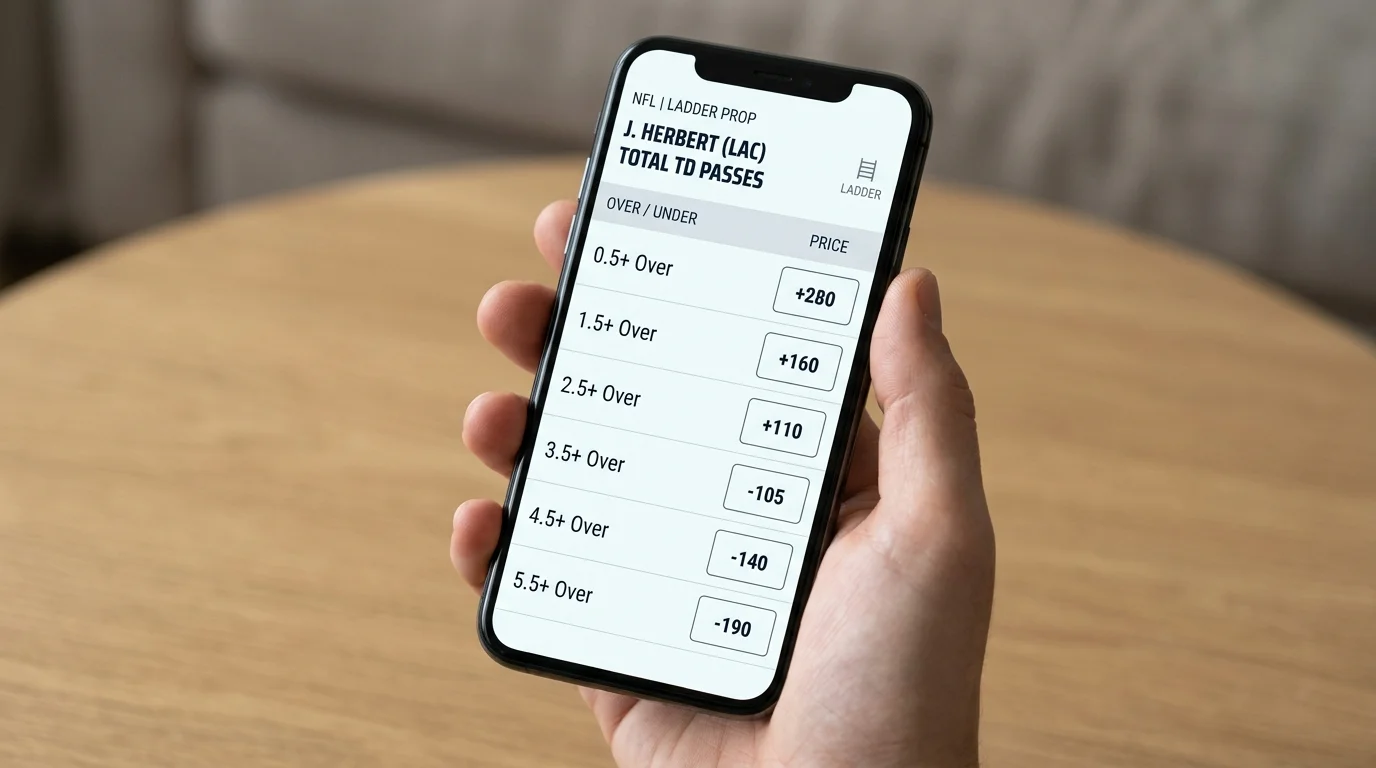
The whole concept is a trade between probability and payout. Lower the threshold and the bet becomes more likely but pays less; raise it and the bet becomes a longer shot but pays more. The standard line sits in the middle as the book’s default, and the alt ladder fans out on either side. Once you understand that you are simply moving along a probability-for-price curve, the menu stops looking confusing and starts looking like a tool, one that lets you shape a bet to fit your read rather than accepting the book’s preset number.
Alt lines exist across most prop types, and they are increasingly central to how bettors construct combination bets, where you want to tune each leg’s likelihood. Used well, they let you express a confident read more precisely. Used carelessly, they are a way to chase a longer price into a worse bet. The difference, as always, comes down to whether you understand what you are paying for the move you are making.
Try smaller stakes first with NFL micro bets before scaling up alt lines.
What an alt line is and how the ladder works
An alt line is one rung on a ladder of thresholds the book posts for a single prop. Take a rushing yards prop with a standard line at 59.5. The alt ladder might offer 39.5, 49.5, 69.5, 79.5, and more, each with its own price. The lower rungs are more likely to hit and pay shorter; the higher rungs are less likely and pay longer. The ladder is continuous in spirit: as the threshold climbs, the probability of clearing it falls, and the price lengthens to compensate.
The pricing follows directly from probability. A lower line that the player will almost certainly clear is priced as a heavy favourite, short odds for a likely outcome. A higher line that requires a big game is priced as a longshot, long odds for an unlikely outcome. The book is doing the same maths it does on the standard line, just shifting the threshold and recomputing the fair price, then adding its margin. The standard prop at -110 each way carries an overround of about 4.8 per cent; the alt rungs carry their own margins built around their own probabilities.
The key mental model is that you are not finding a better bet by moving along the ladder; you are finding a differently-shaped bet. A lower alt line trades payout for safety; a higher one trades safety for payout. Neither is inherently superior. Which rung suits you depends entirely on how confident your projection is and how much variance you are willing to accept, which is the judgement the ladder is built to let you express.
The trade-off in detail
Why would anyone take a lower line at worse odds? Because confidence in direction does not always mean confidence in magnitude. Suppose I am sure a running back will be productive but unsure exactly how productive, given a murky game script. Taking a lower alt line, well below the standard, lets me bet the productive read with a high probability of cashing, accepting a short price as the cost of that safety. I am buying a wider cushion against the variance I cannot resolve.
The opposite move suits a different read. If I project a player to smash his standard line, taking a higher alt rung lets me bet that conviction at a longer price, capturing more payout for the strong projection I hold. The trade is explicit: I accept a lower probability of winning in exchange for a bigger return when I do. Both moves are rational; they just express different shapes of confidence. The mistake is reaching for the high rung purely because the price is exciting, without a projection that justifies the lower probability.
One caution worth stating plainly: alt lines do not escape the house margin, and the rungs further from the standard line can carry heavier effective margins. The vig on props already runs to 6 to 10 per cent and often more, and an exotic-looking alt rung is not a loophole around that. You are still paying the book, possibly more per unit of probability than on the standard line. Move along the ladder for a reason rooted in your read, never just to chase a number that looks generous, because generous-looking prices on alt rungs are generous to the book as often as to you.
Explore best nfl player prop bets for all NFL prop guides.
When to actually use an alt line
The clearest use case is shaping a leg inside a combination bet. When you build a multi-leg prop ticket, the overall price multiplies the legs together, so tuning each leg’s threshold lets you control both the likelihood and the payout of the whole bet. Lowering an alt line on a leg you are unsure about can rescue an otherwise shaky combination into something with a realistic chance, while raising a leg you are confident in can boost the total return. Alt lines turn a combination from a fixed product into something you can engineer. The full mechanics of how those legs combine and price are worth reading in my guide to same game parlays and bet builders, because alt lines are most powerful in exactly that context.
As standalone bets, alt lines earn their place when your projection has a clear shape your standard line cannot capture. A high-floor, modest-ceiling read points you down the ladder to a safer rung; a boom-or-bust read points you up it. The discipline is to let the projection choose the rung, not the price. I decide what I think the player will do, then find the rung where my probability beats the book’s fair number by the most, devigging each candidate rung before I compare them. Done that way, the alt menu is a precision instrument. Done backwards, chasing the longest price the ladder offers, it is just a fancier way to lose.
Why would I take a lower line at worse odds?
Because you may be confident in direction but not in magnitude. If you are sure a player will be productive but unsure exactly how much, a lower alt line lets you bet that read with a high probability of cashing, accepting a shorter price as the cost of safety. You are buying a wider cushion against variance you cannot resolve, which can be the smarter bet when the game script or role is murky.
Do alt lines carry more vig?
They can, particularly the rungs furthest from the standard line. Alt lines do not escape the house margin; the book recomputes a fair price for each threshold and adds its cut, and exotic-looking rungs can carry heavier effective margins than the standard line. The vig on props already runs to 6 to 10 per cent and often more, so a generous-looking alt price is not a loophole. Always devig each rung before judging its value.
Are alt lines good for building parlays?
Yes, this is where they shine. In a multi-leg bet the overall price multiplies the legs, so tuning each leg’s threshold lets you control both the likelihood and the payout of the whole ticket. Lowering an alt line on a shaky leg can make a combination realistic, while raising a confident leg boosts the return. Alt lines turn a combination from a fixed product into something you can deliberately engineer around your reads.
Created by the ”Best nfl Player Prop Bets” editorial team.